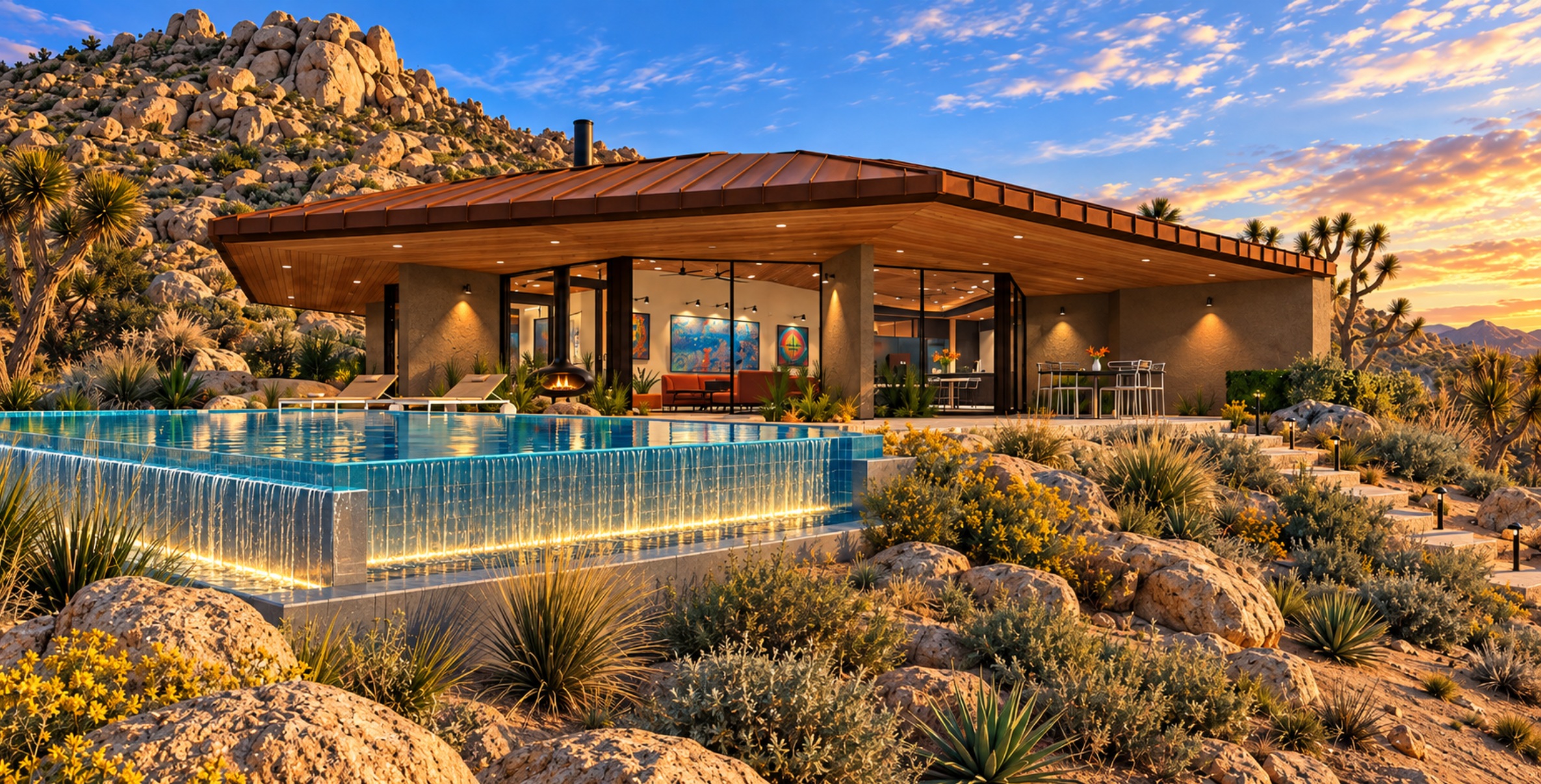
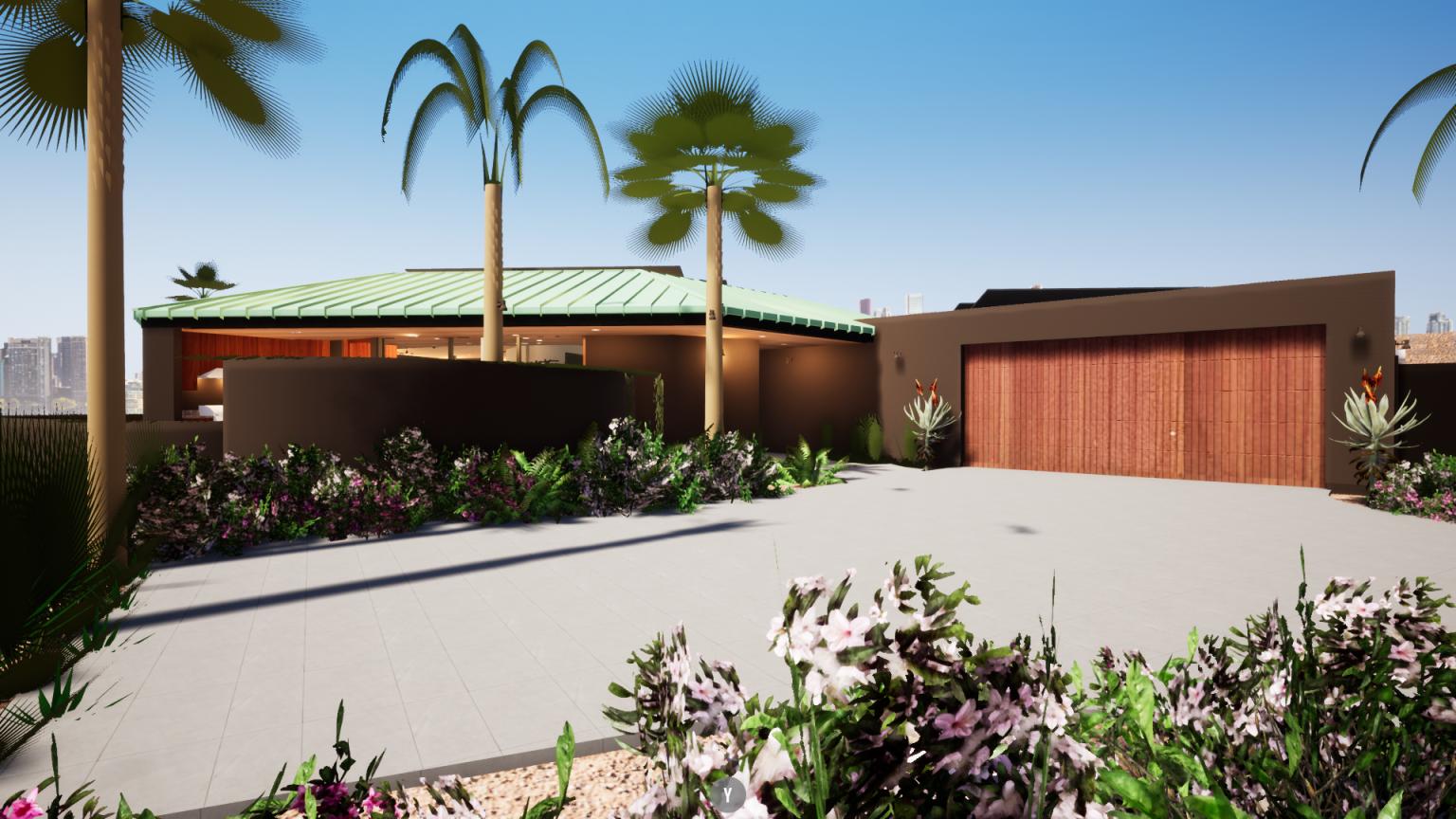
Select residences featured on this website were developed as fully resolved custom homes with substantial construction documentation already completed. For clients who connect strongly with a particular design, these projects may offer an opportunity to adapt and refine an already highly developed residence rather than beginning the design process from the ground up.
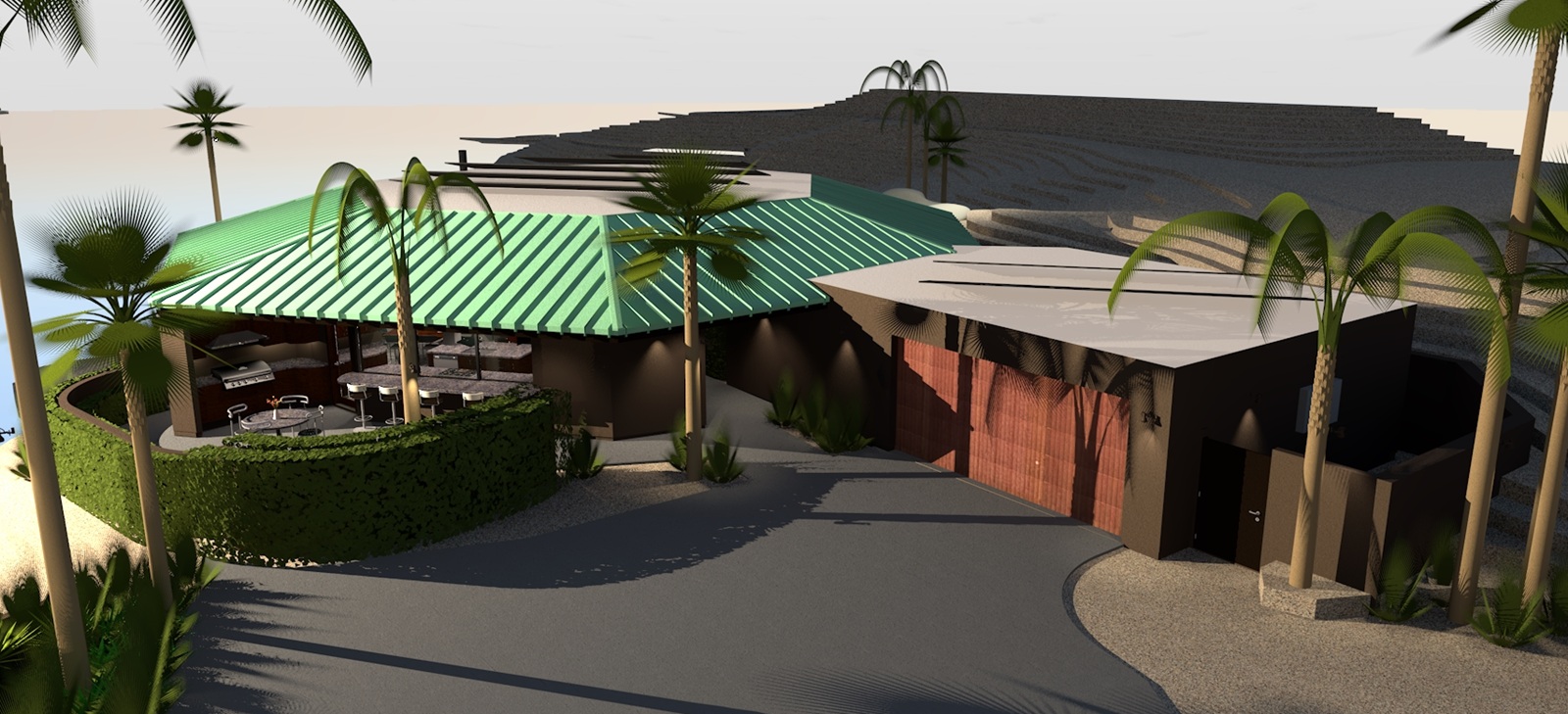
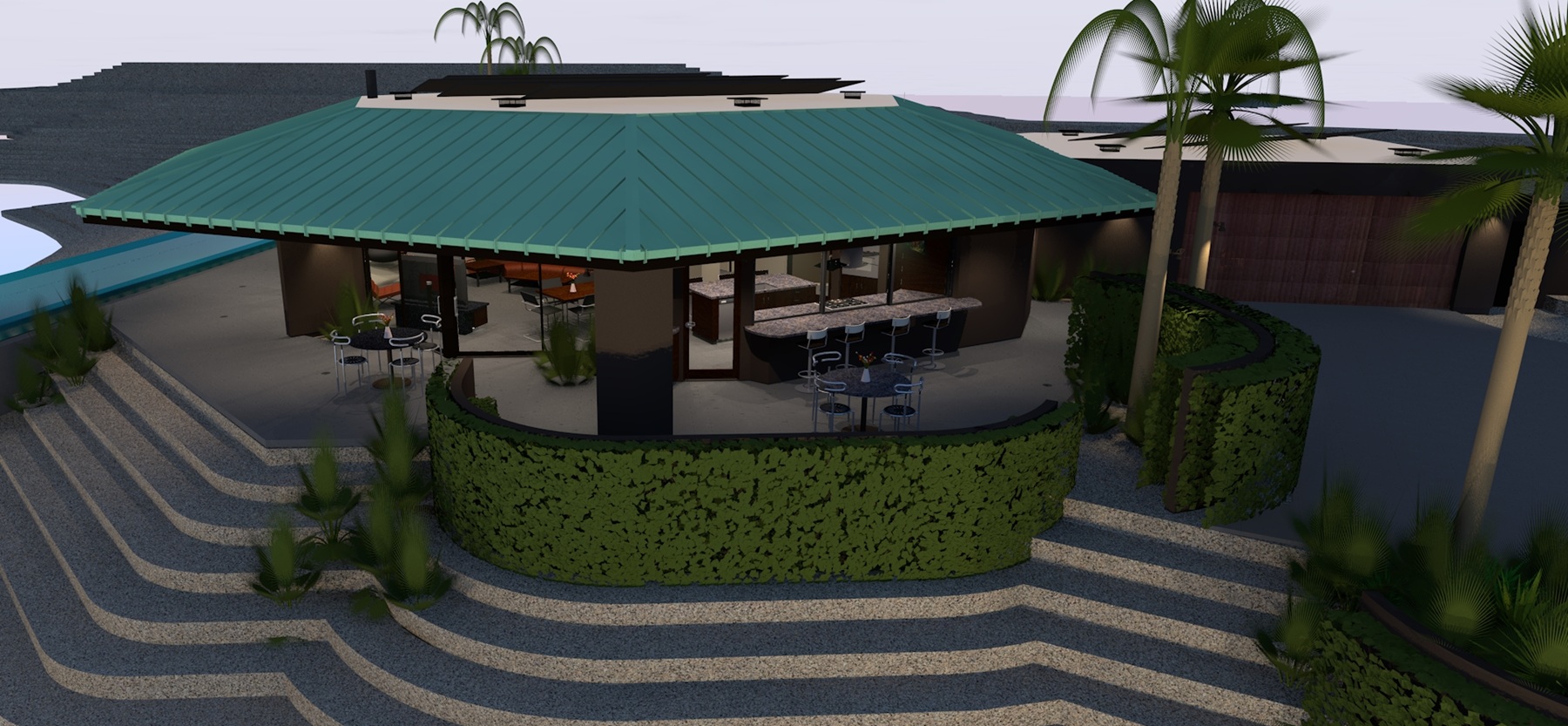
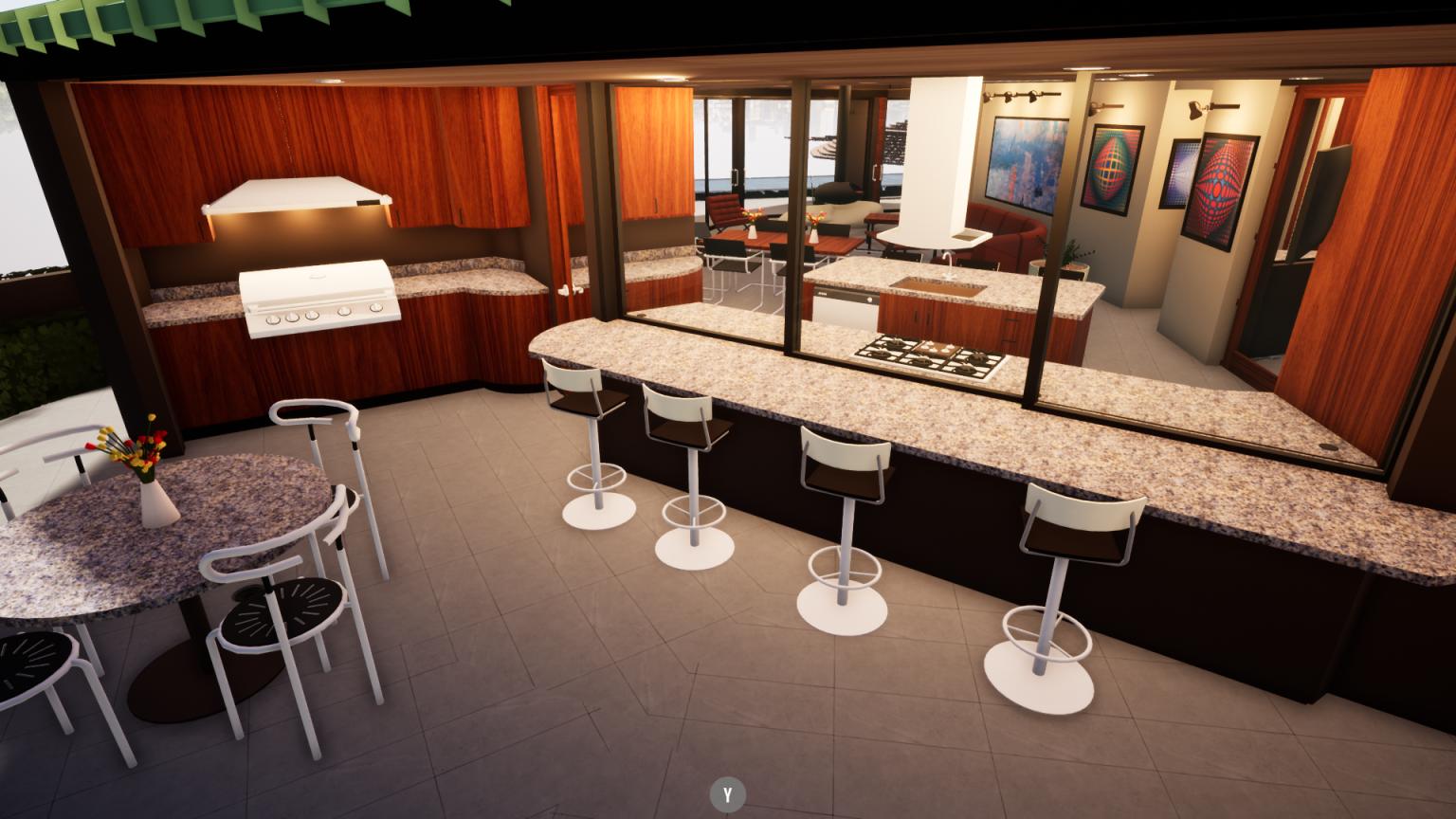
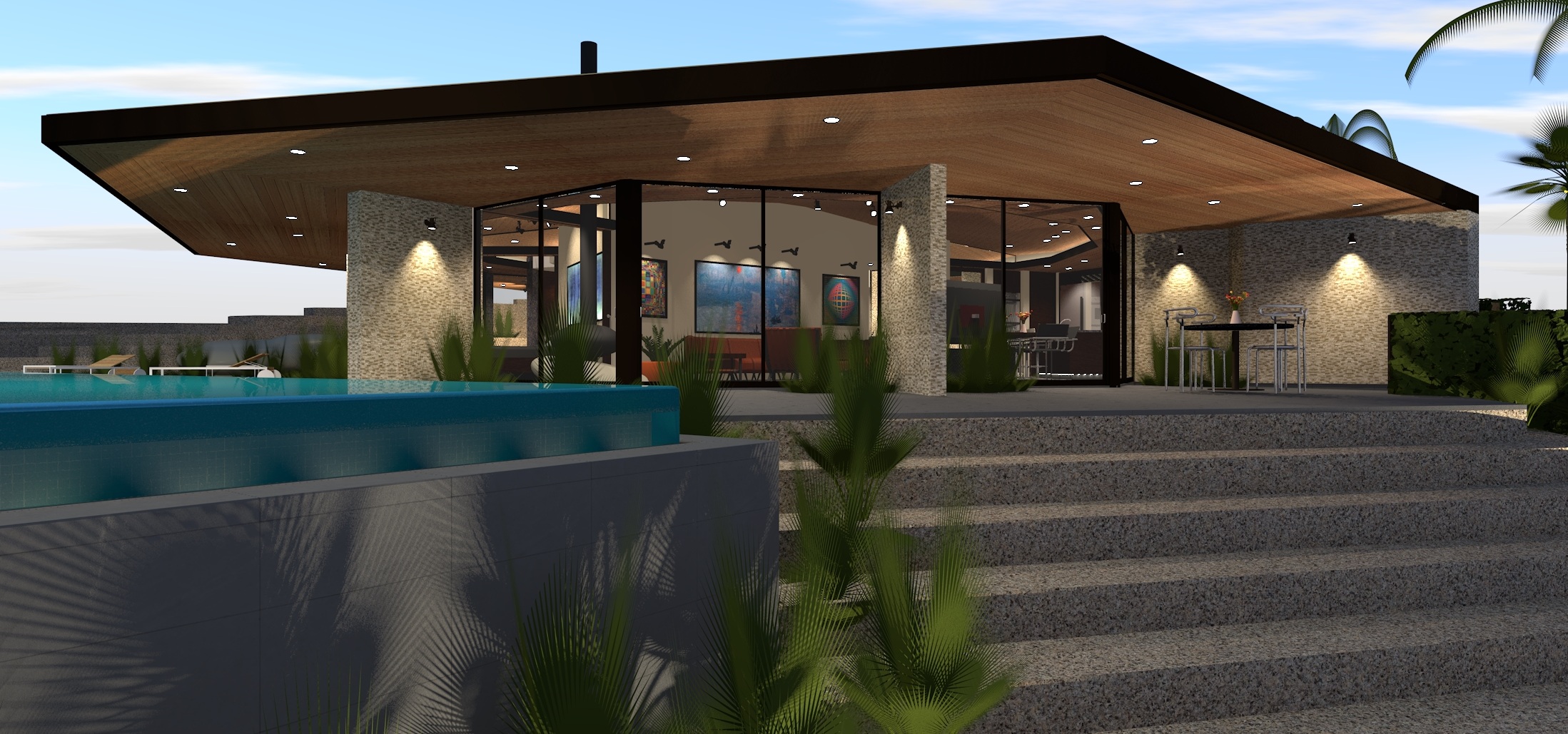
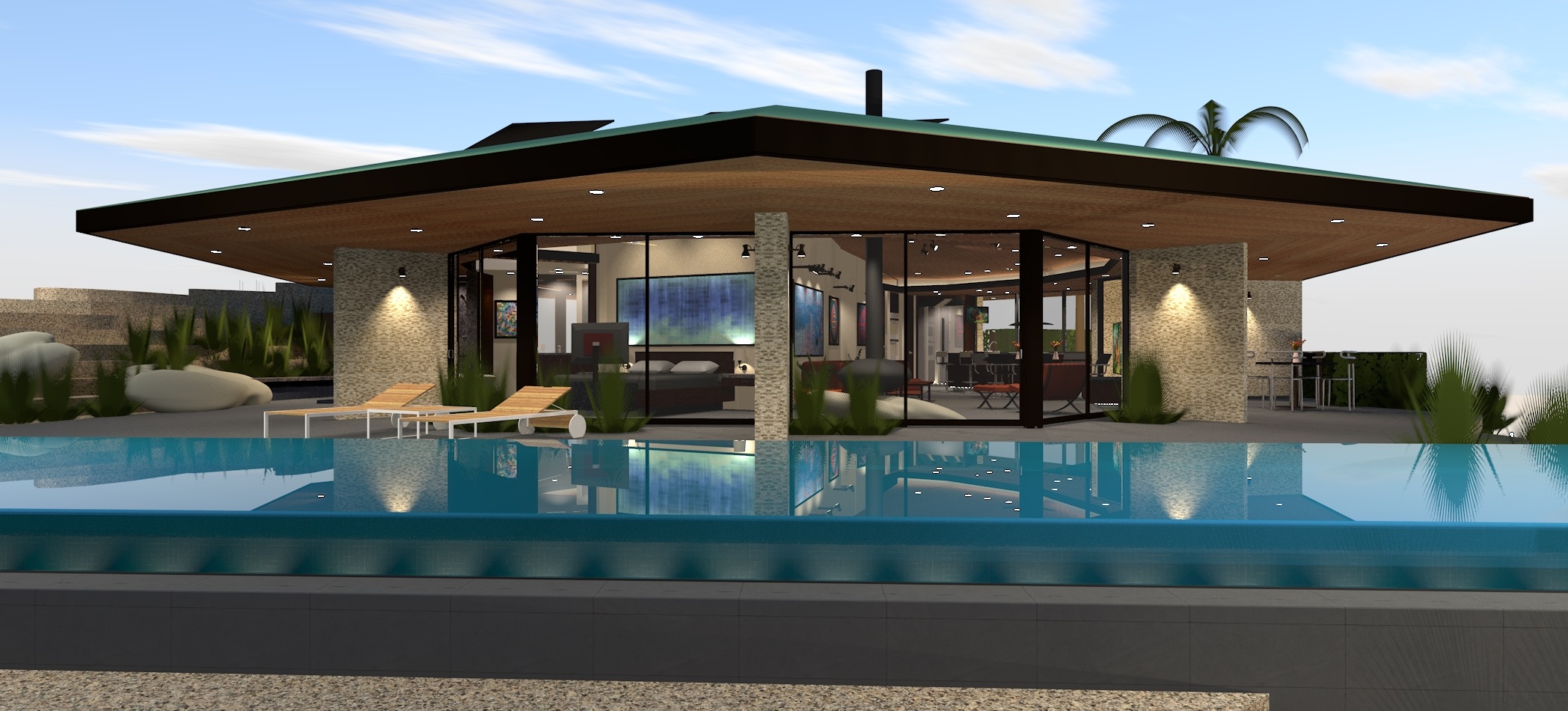
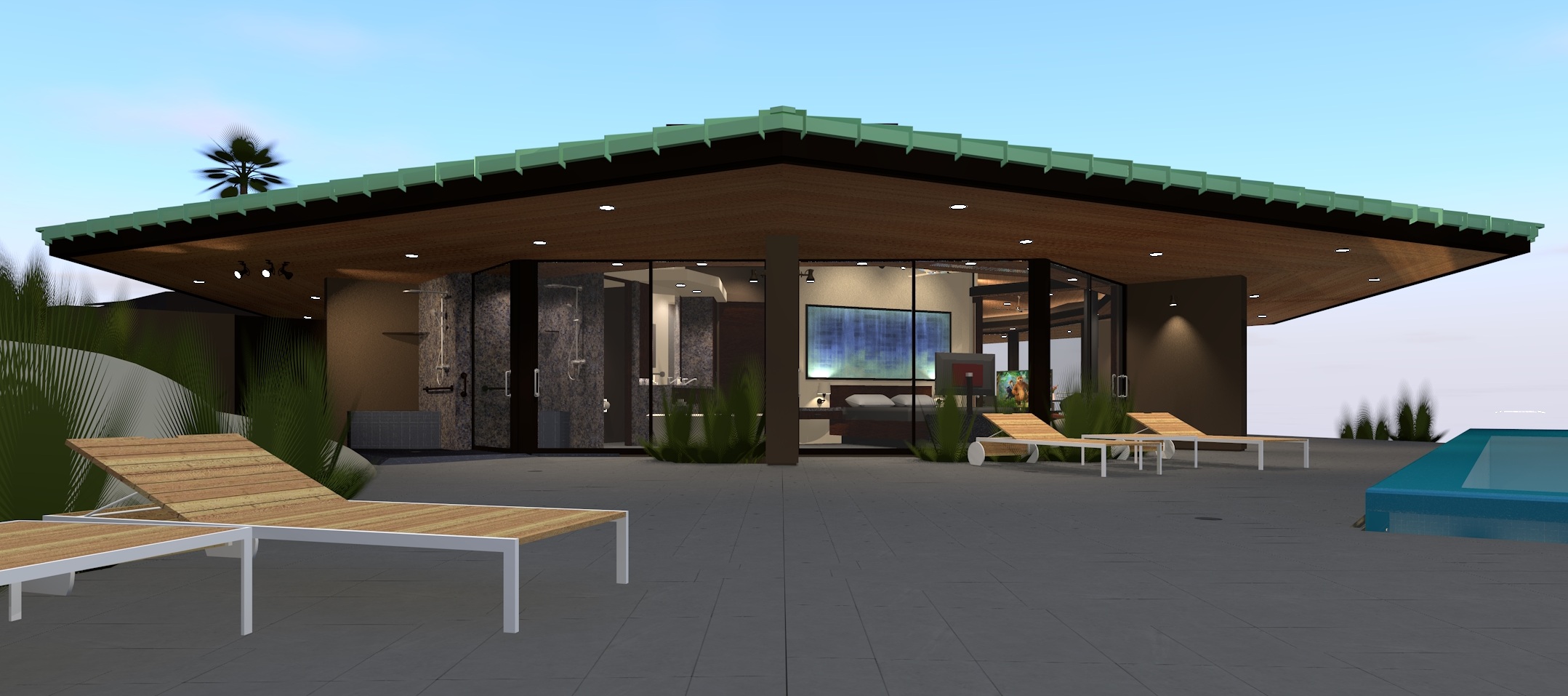
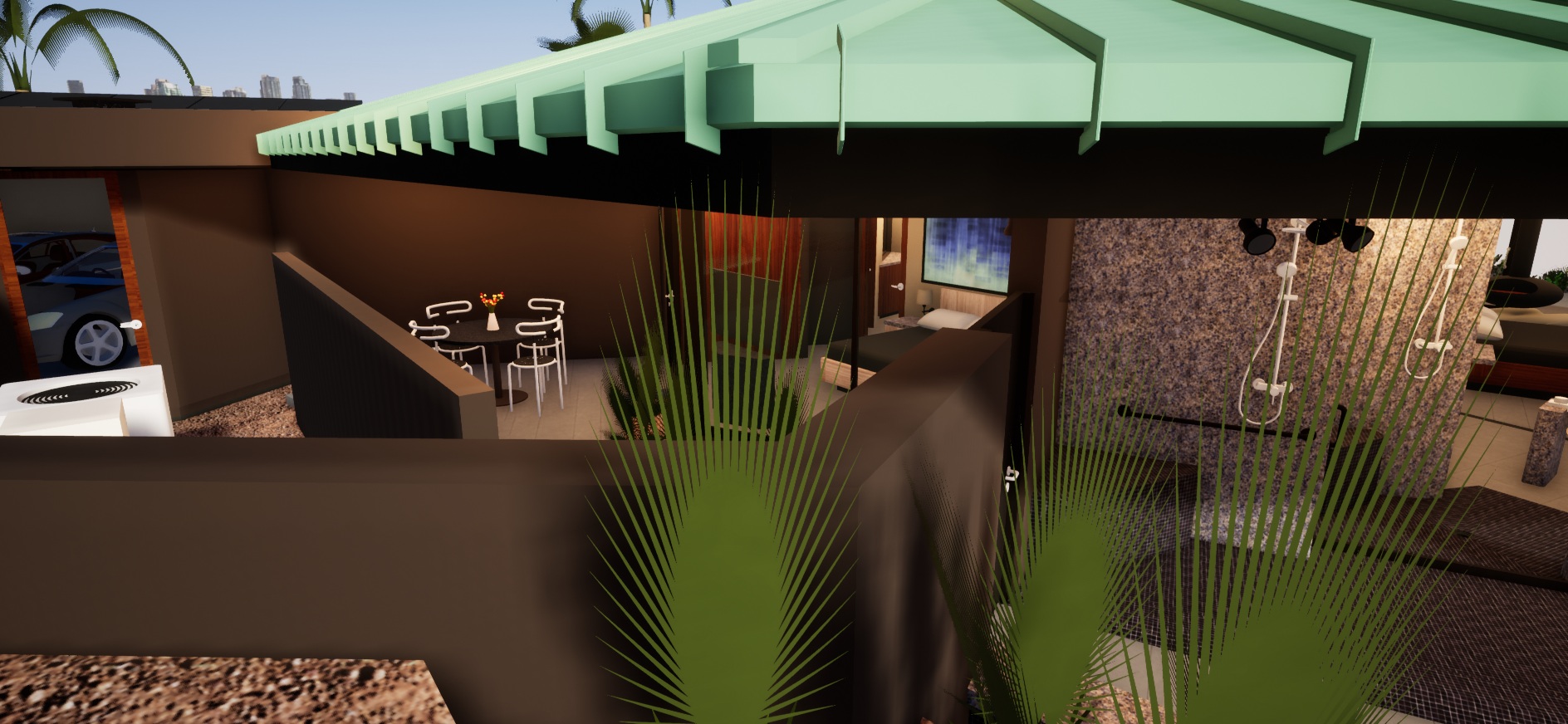
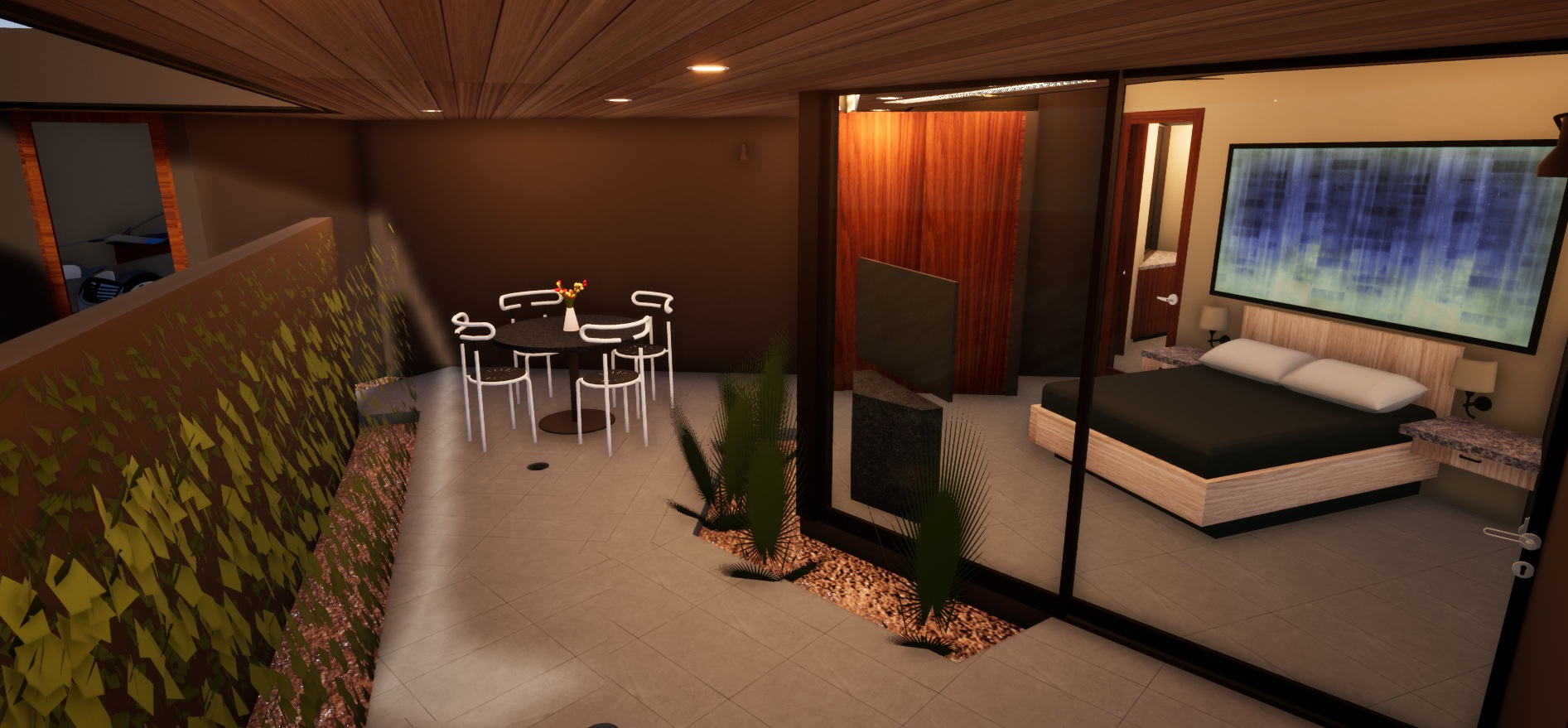
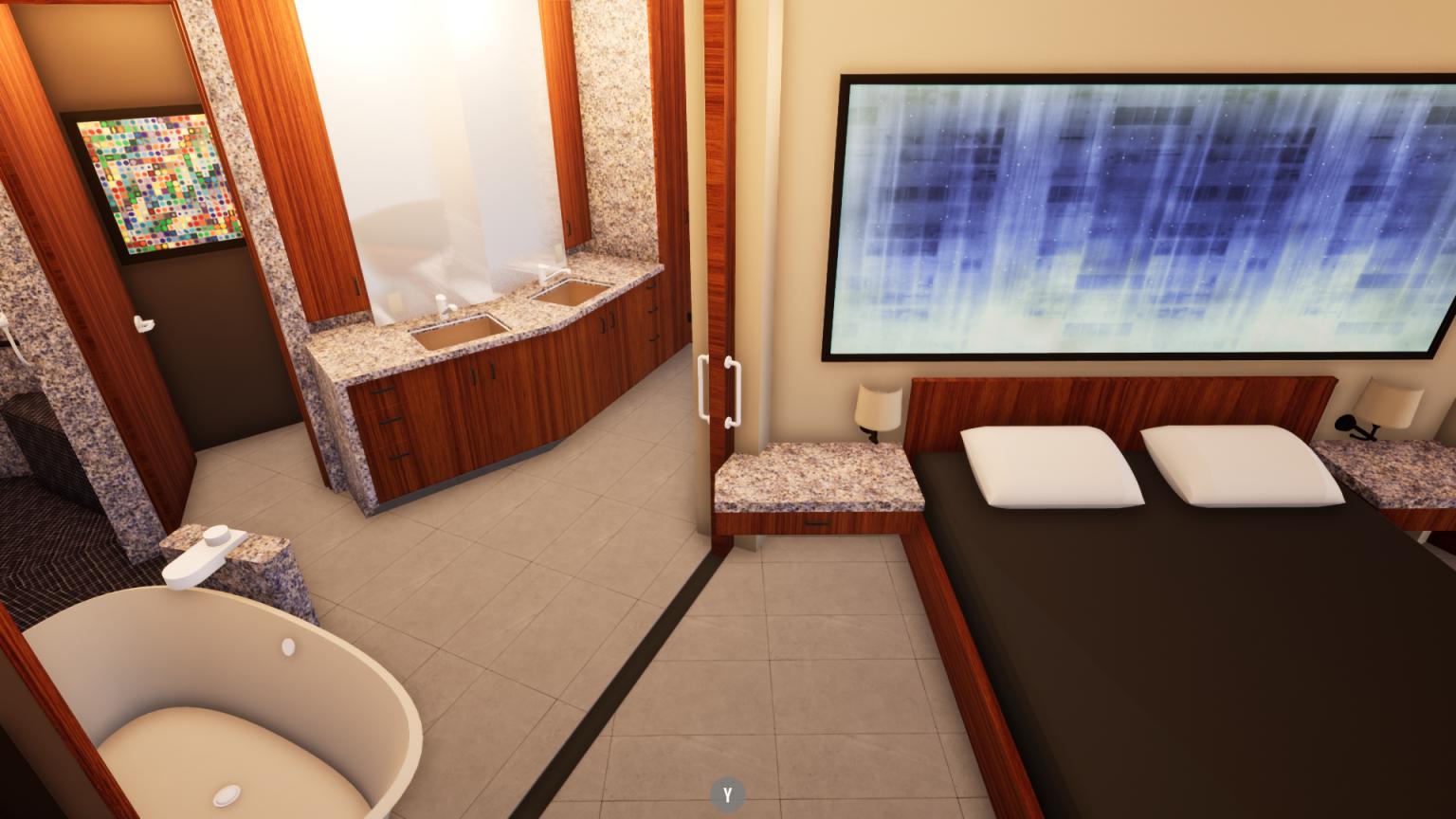
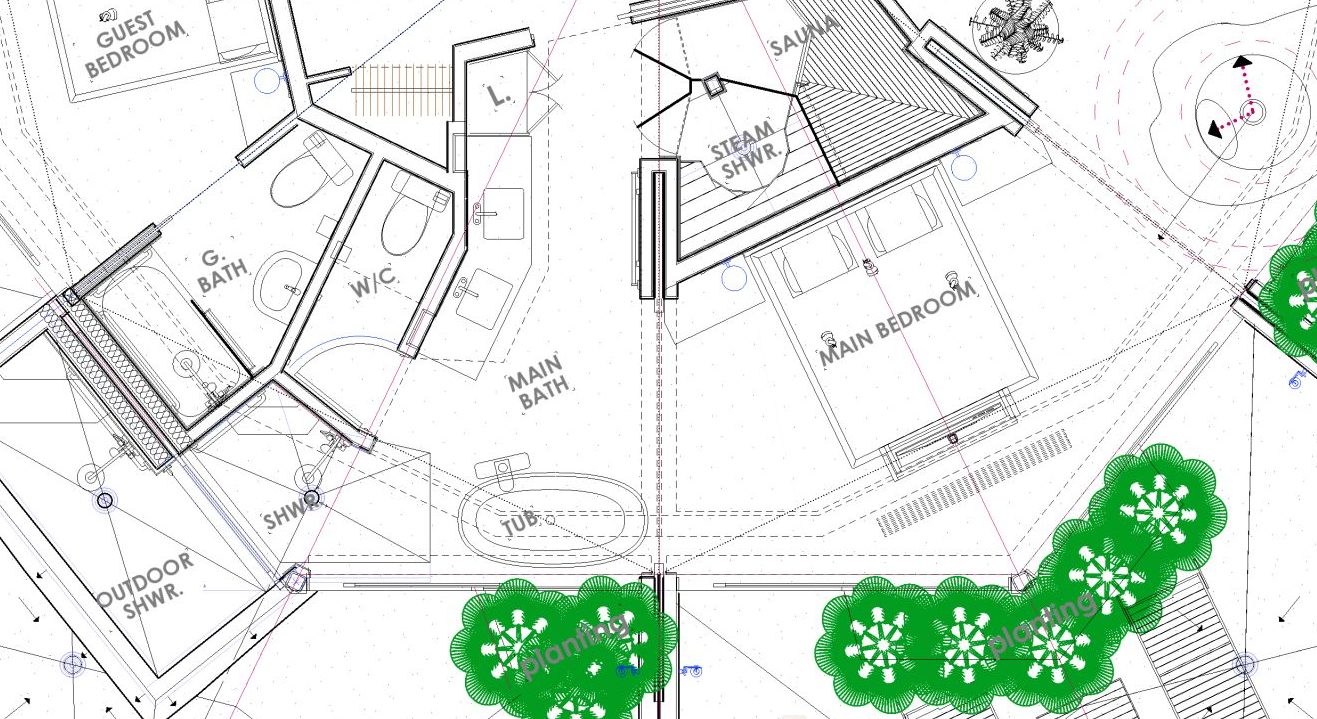
The residence was designed around the idea of dissolving the traditional boundary between interior conditioned living spaces and the surrounding desert environment while still maintaining carefully controlled layers of privacy within the home itself.
Large full-height narrow stile-and-rail aluminum framed sliding glass door systems connect the conditioned interior spaces to shaded exterior terraces, outdoor living areas, and panoramic desert views extending beyond 180 degrees across the surrounding landscape. These exterior glazing systems emphasize visual continuity, daylight, and indoor/outdoor living while maintaining a refined minimal structural profile.
Within the interior of the residence, a separate series of custom full-height full-light lift-and-glide French door systems were introduced between the primary bath suite, primary bedroom, and central living environment. These bi-parting assemblies recess fully into concealed wall pockets, allowing the spaces to either function as distinct private rooms or open completely into a continuous flowing living sequence.
The lift-and-glide interior partitions were conceived as finely detailed wood-finished narrow stile-and-rail systems incorporating electrically operated smart glazing technology capable of transitioning from clear to private opacity when desired. This allows the residence to maintain openness, daylight, and long interior sightlines while still providing selective visual privacy for sleeping and bathing functions.
The main entry door utilizes a related full-light lift-and-glide system that pockets to one side, extending the same architectural language from the private interior zones to the primary point of arrival.
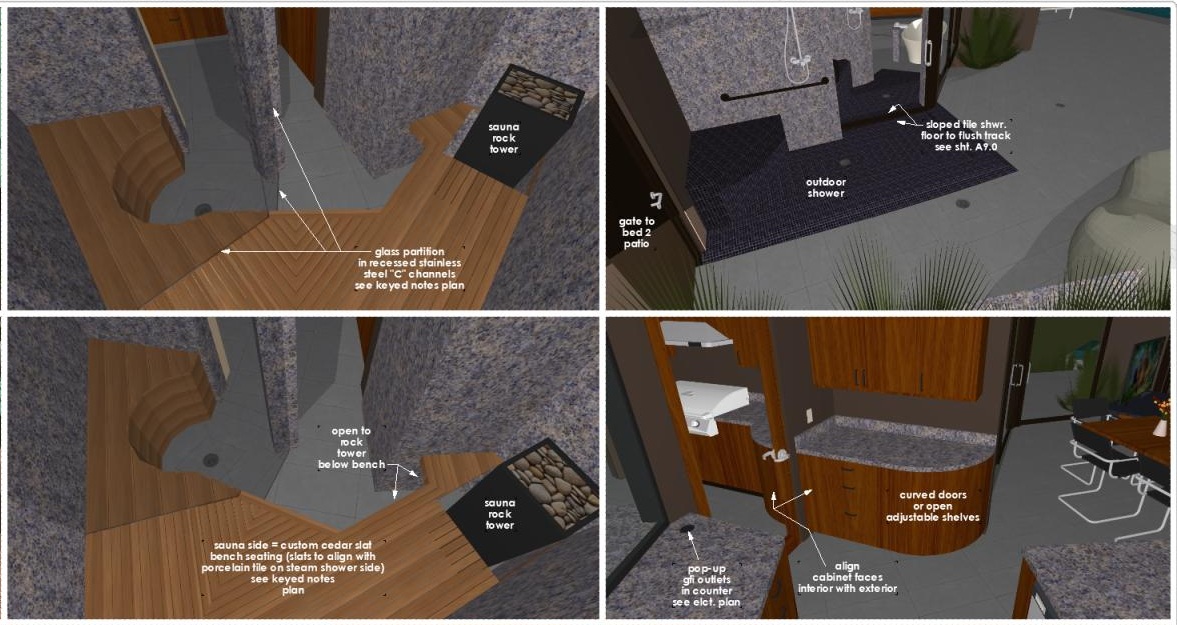
A separate pocketing single-leaf narrow stile-and-rail aluminum framed sliding glass door system between the outdoor shower and indoor primary bath shower allows the indoor shower environment to open directly to the outdoor exterior shower and side shower court, further reinforcing the project’s integration of interior and exterior living functions.
Deep structural overhangs ranging from approximately 9′-4″ to over 15′-6″ create expansive shaded outdoor living zones that wrap the residence and provide significant solar protection while reinforcing the home’s strong horizontal architectural expression. These overhangs transform the perimeter of the residence into a series of usable exterior rooms that remain visually connected to the interior spaces through continuous full-height glazing.
The project combines passive environmental response, panoramic spatial organization, and highly integrated architectural detailing into a fully developed custom residential concept supported by extensive construction documentation and structural coordination.
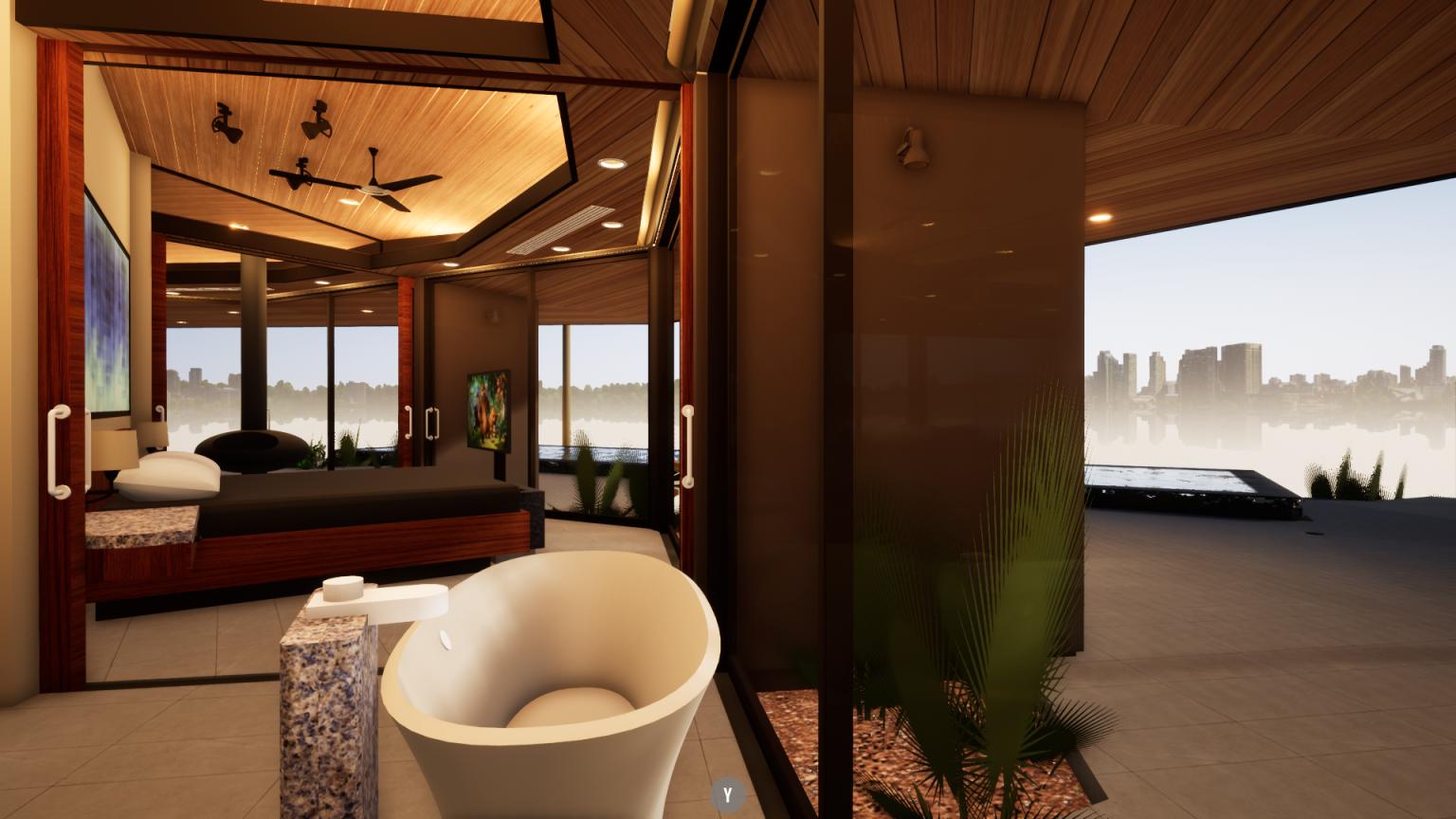
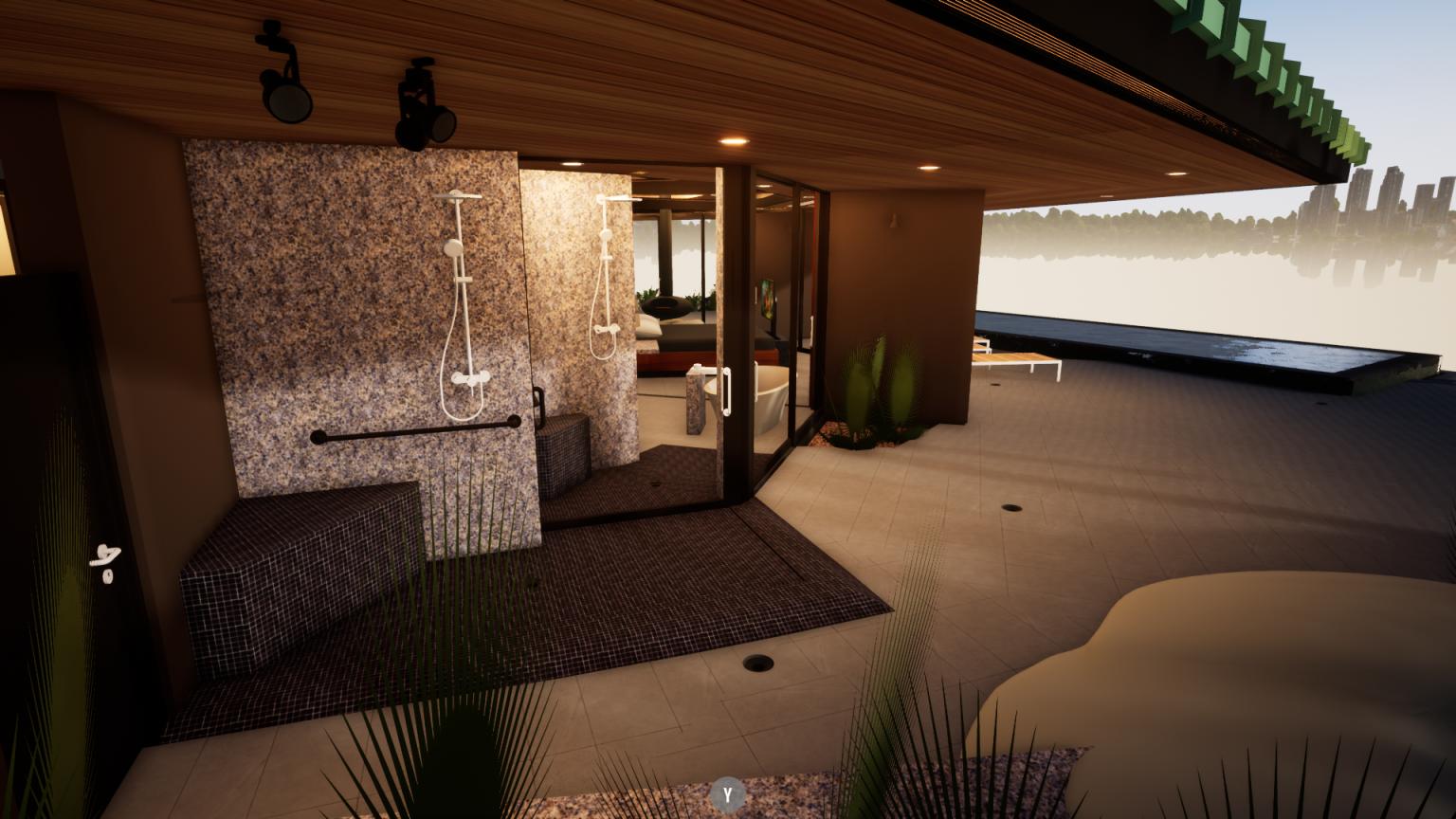
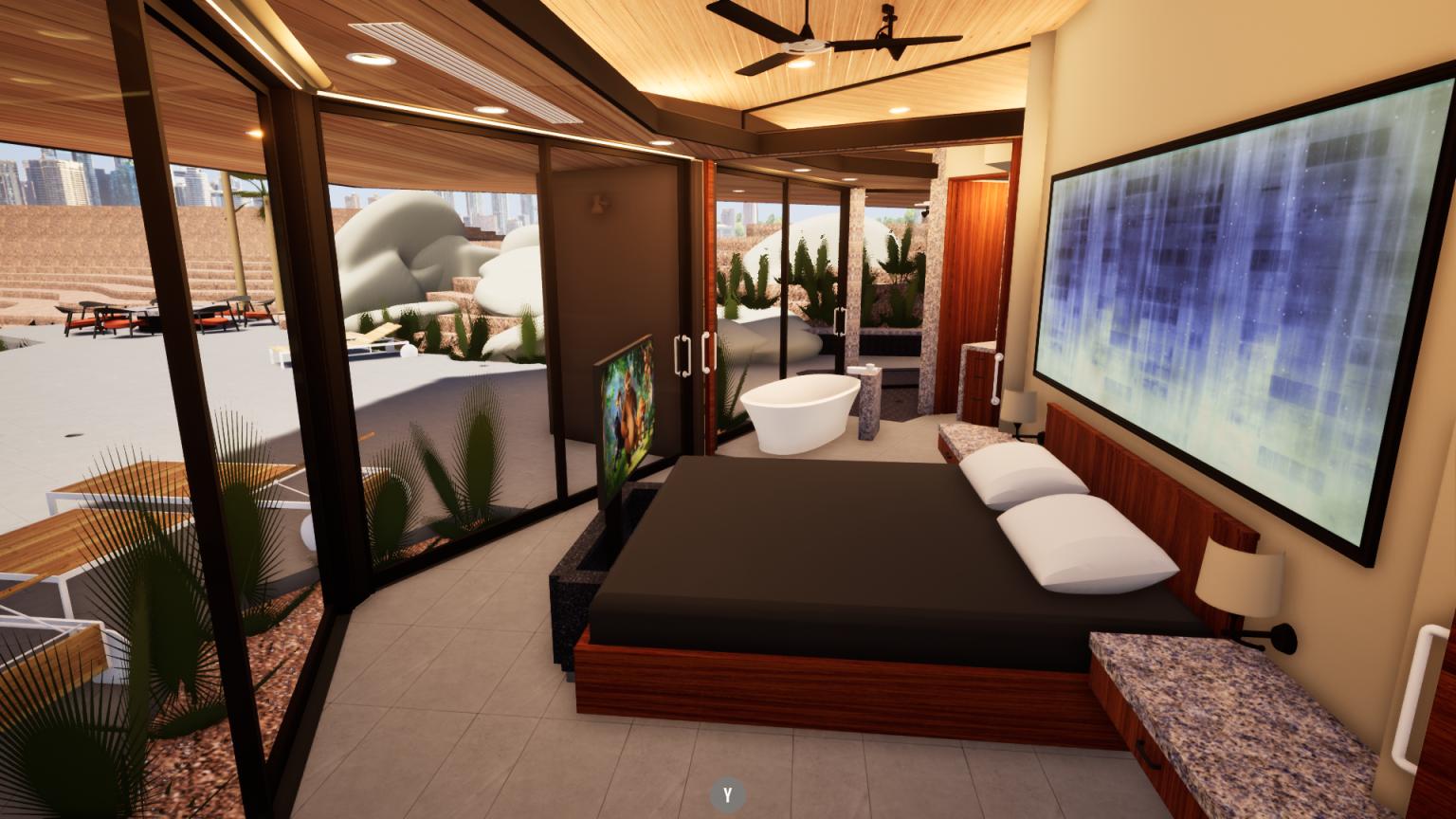
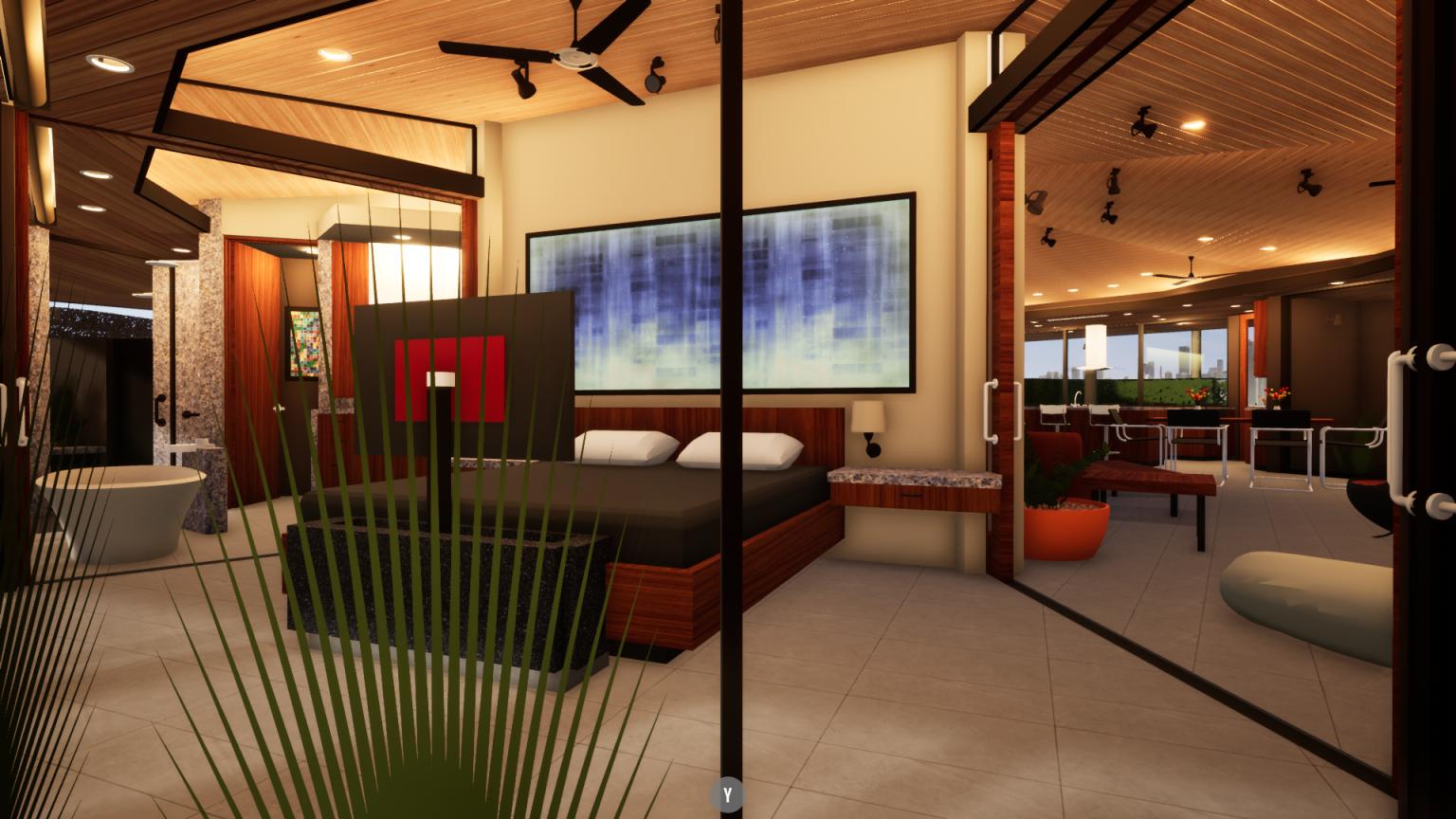
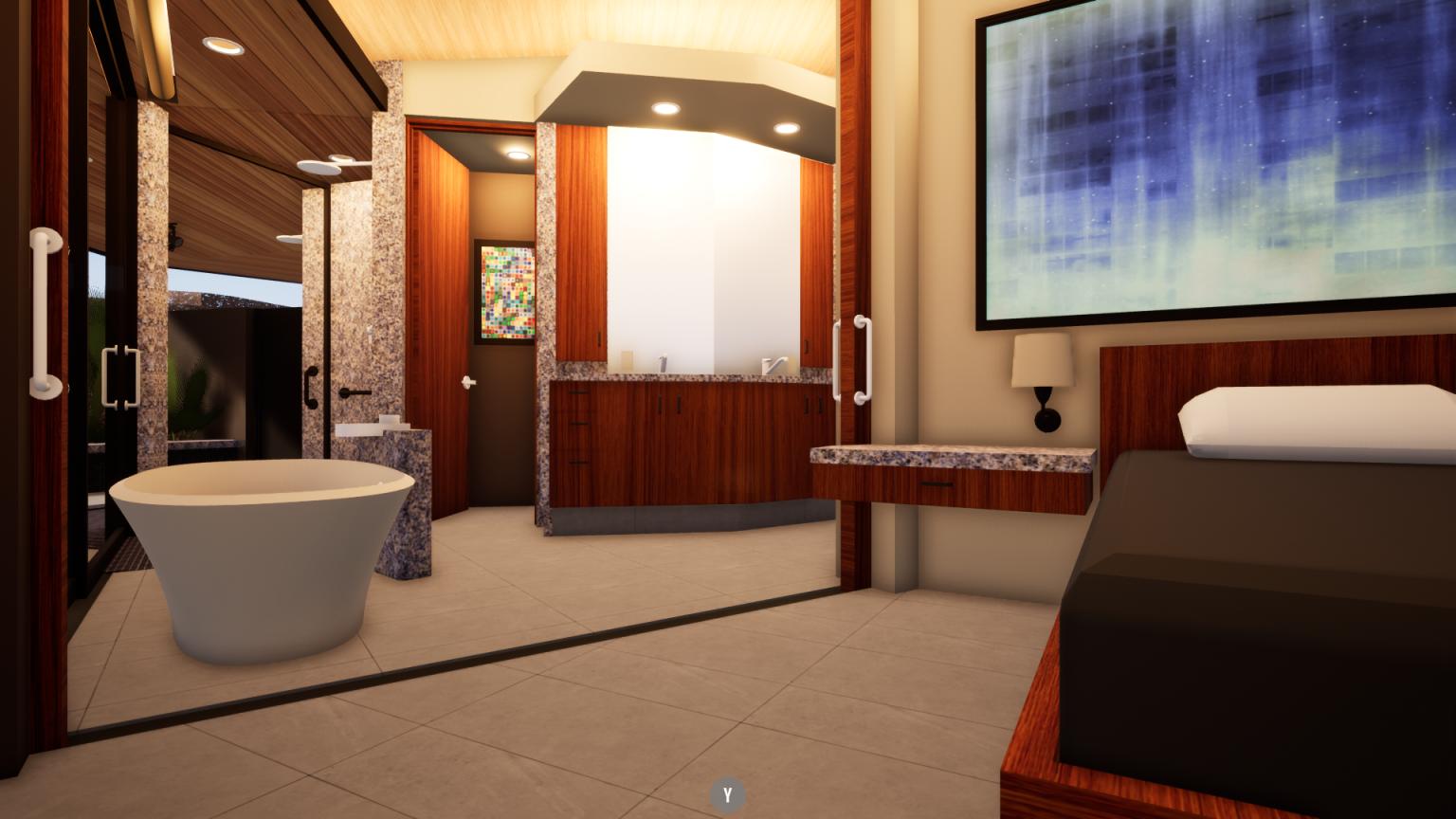
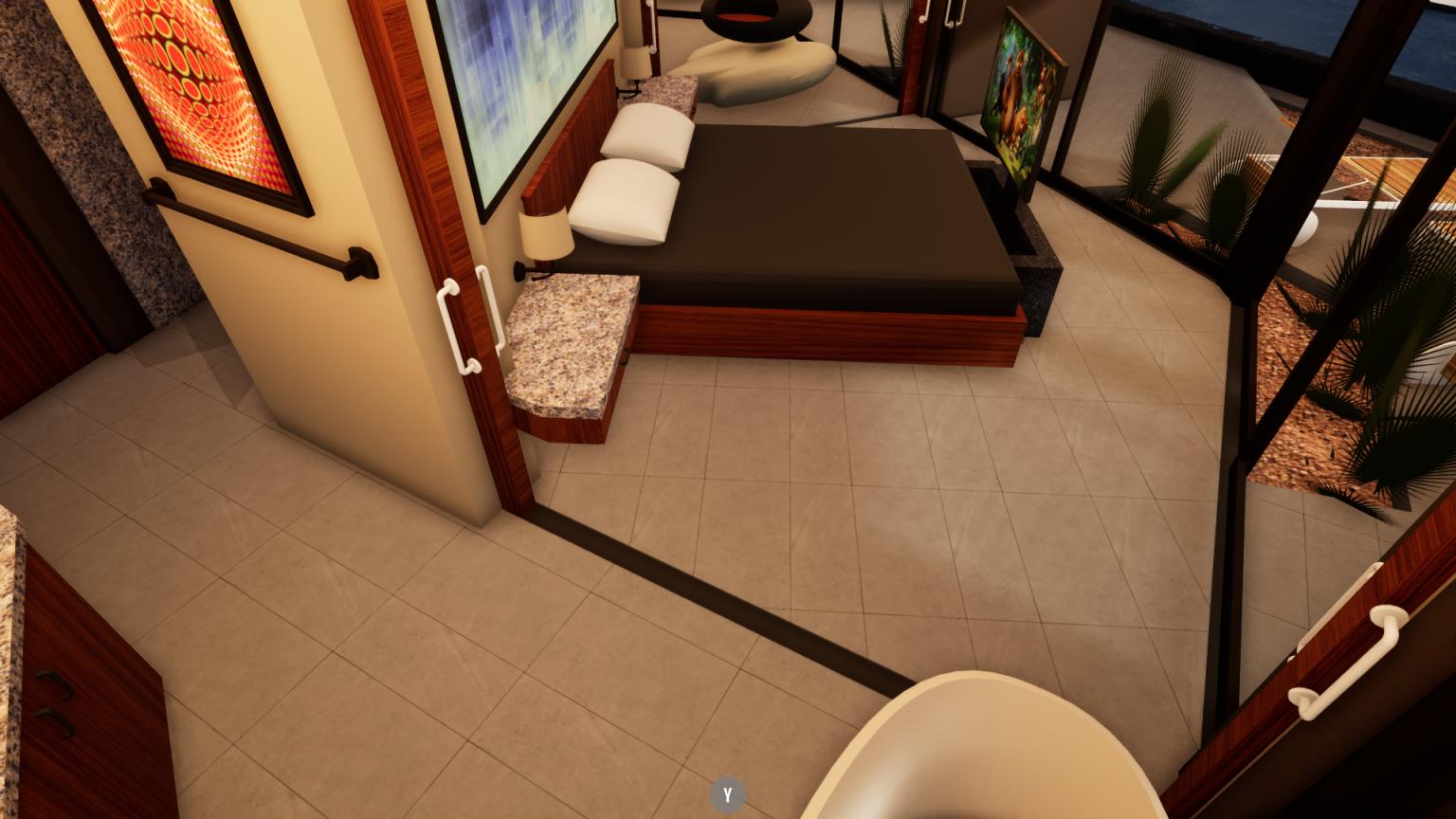
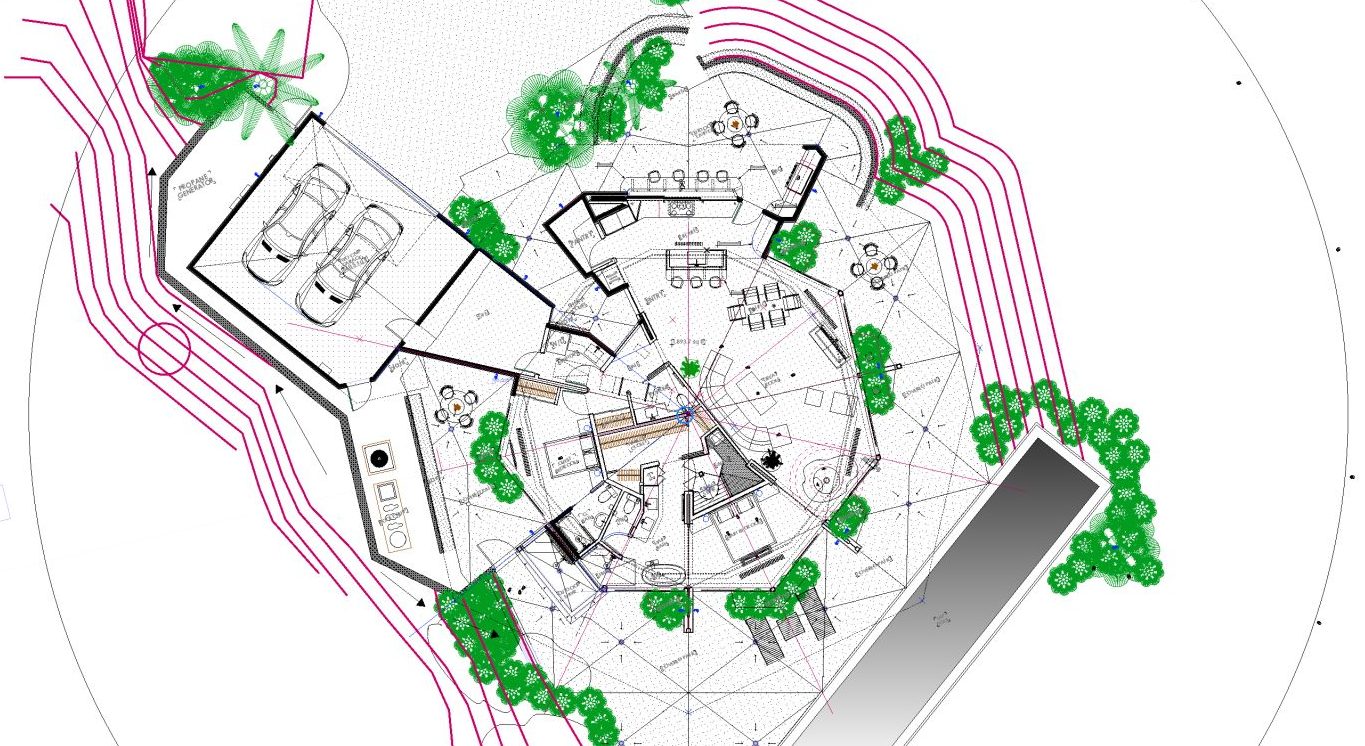
The organization of the primary suite was carefully developed to maximize openness, spatial continuity, and experiential richness while maintaining a highly efficient overall footprint.
Rather than separating the bedroom, bath, dressing, wellness, and outdoor living functions into isolated rooms and corridors, the residence was designed as a sequence of interconnected spaces that visually expand into one another through full-height glazing, aligned circulation paths, and carefully controlled sightlines.
The primary bath suite incorporates a steam shower, sauna, indoor soaking tub, indoor, and outdoor shower arrangement positioned directly adjacent to the sleeping area, allowing the suite to function as a unified private retreat rather than a conventional compartmentalized bedroom layout.
Large retractable lift-and-glide glass wall systems dissolve the boundary between the conditioned interior and the surrounding shaded exterior terraces, allowing the suite to open directly toward the panoramic landscape beyond.
The geometric organization of the plan also allowed structural systems, circulation paths, view corridors, and exterior overhang relationships to be integrated into a cohesive radial composition that reinforces the residence’s architectural identity from both inside and outside the structure.
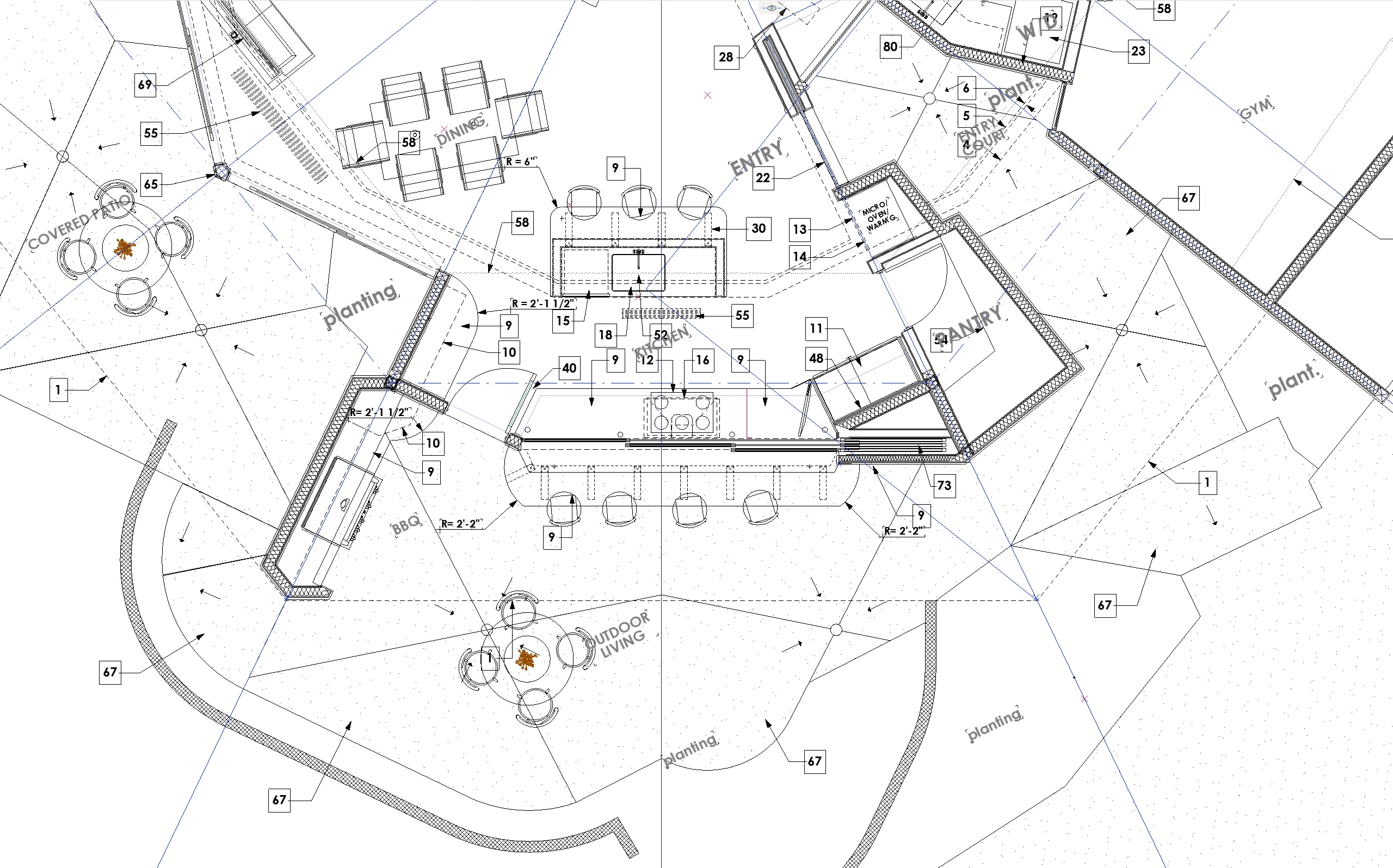
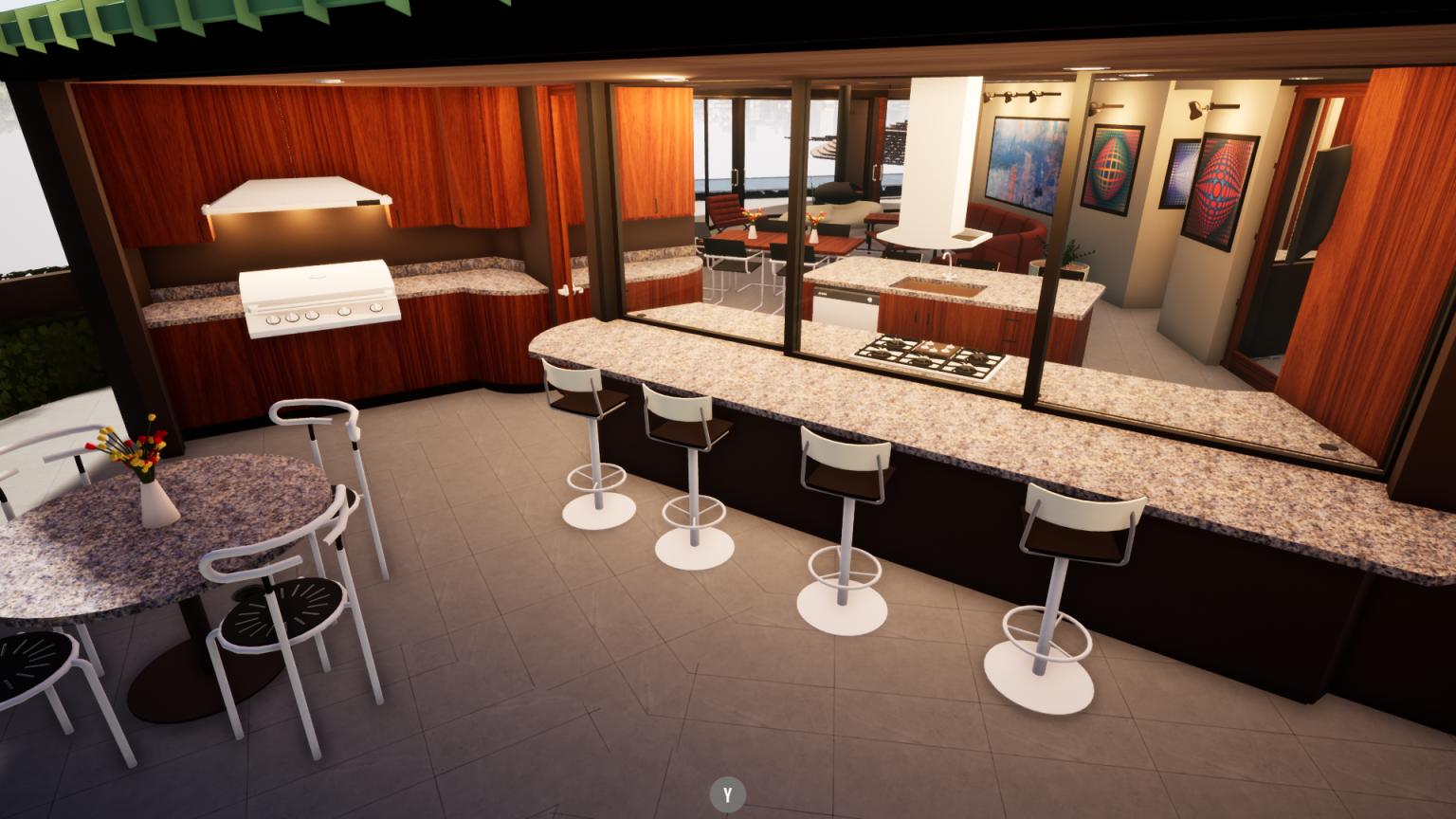
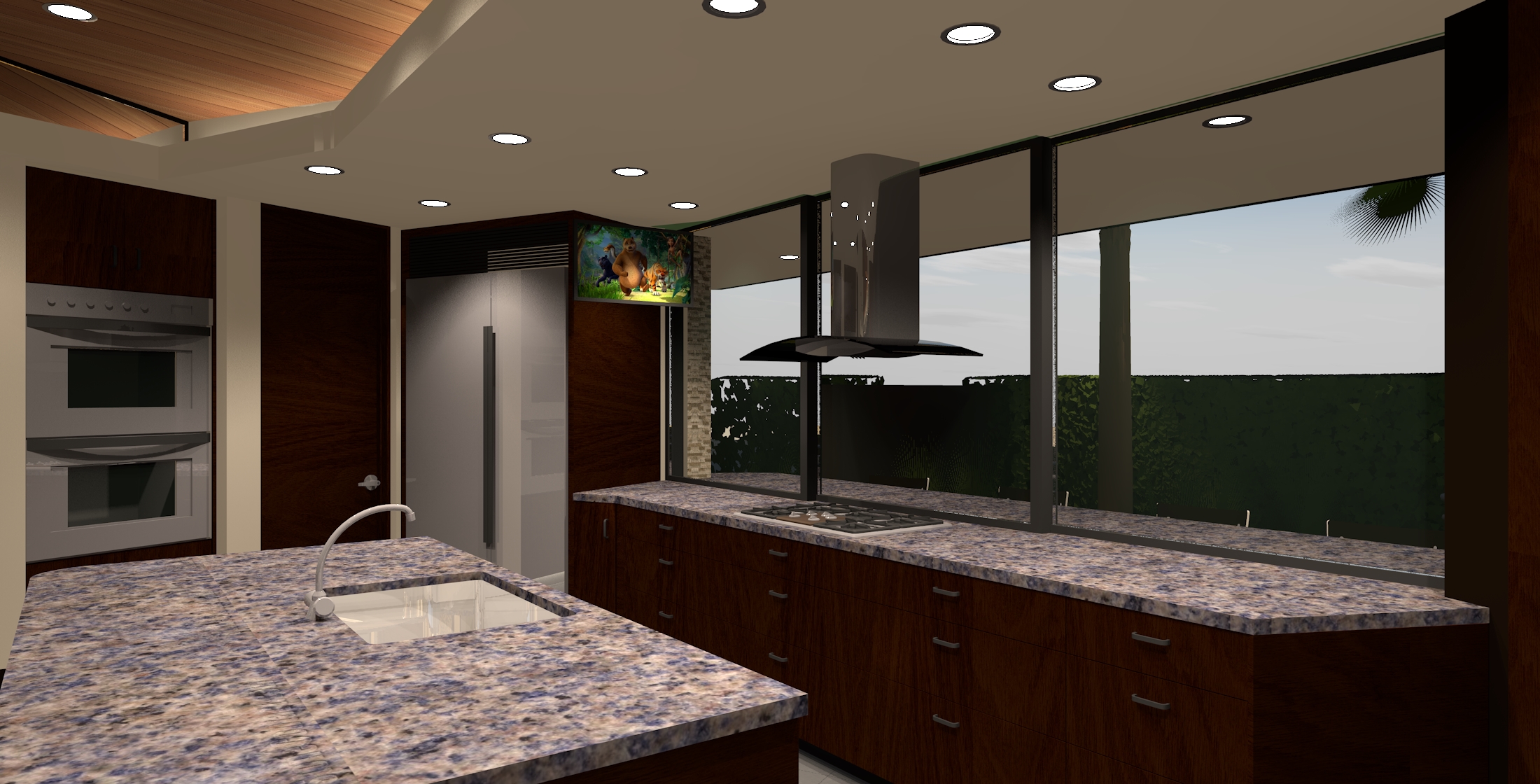
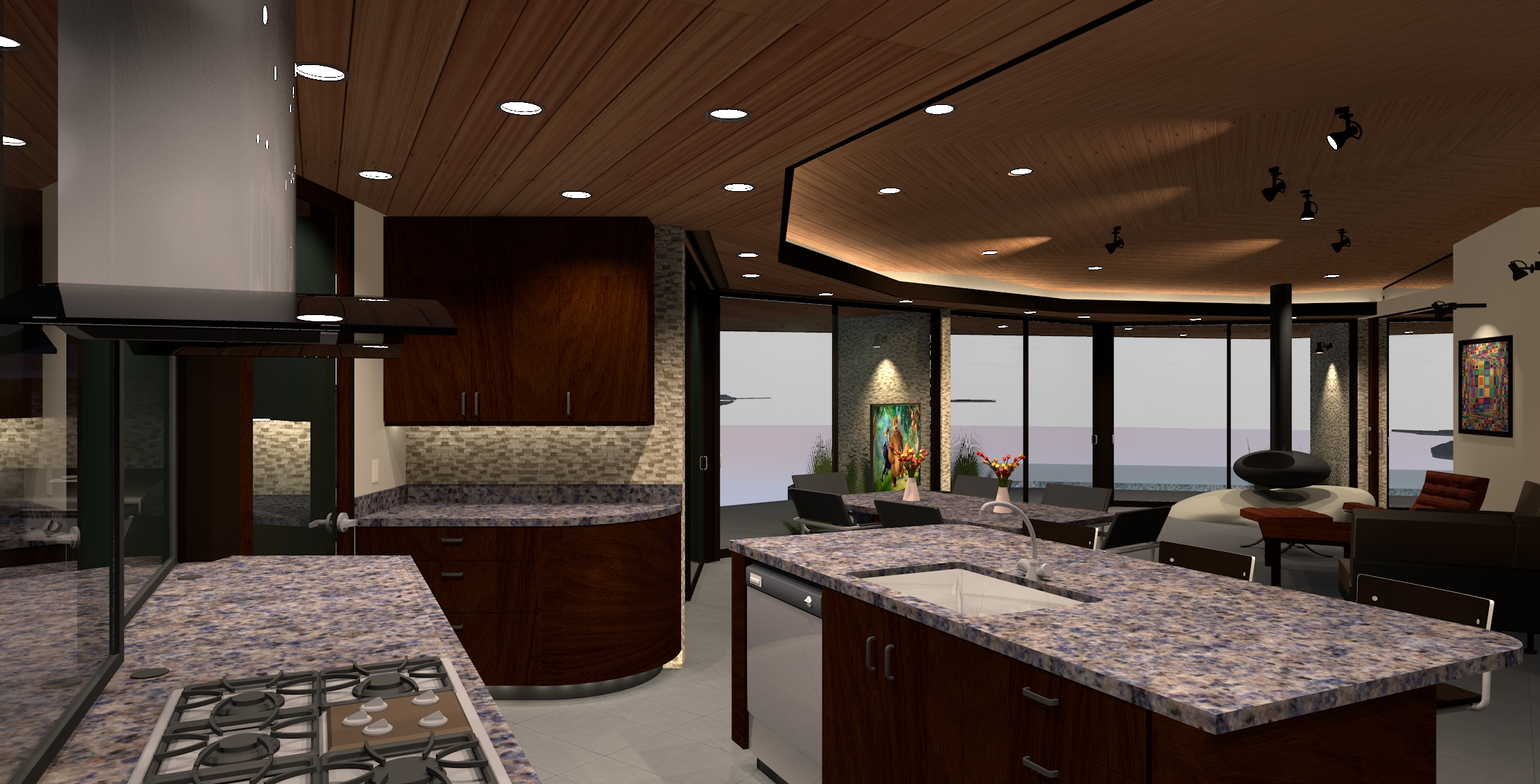
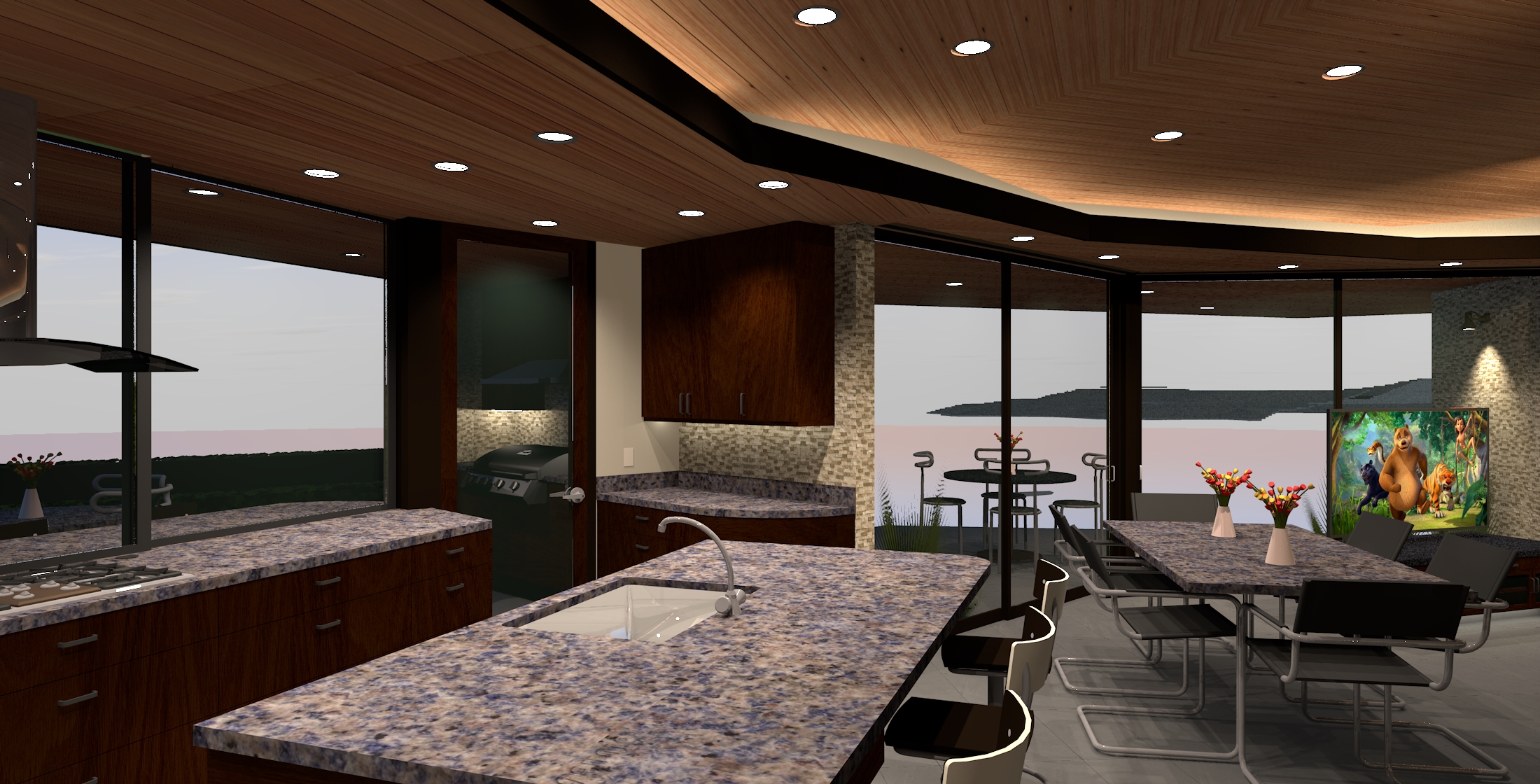
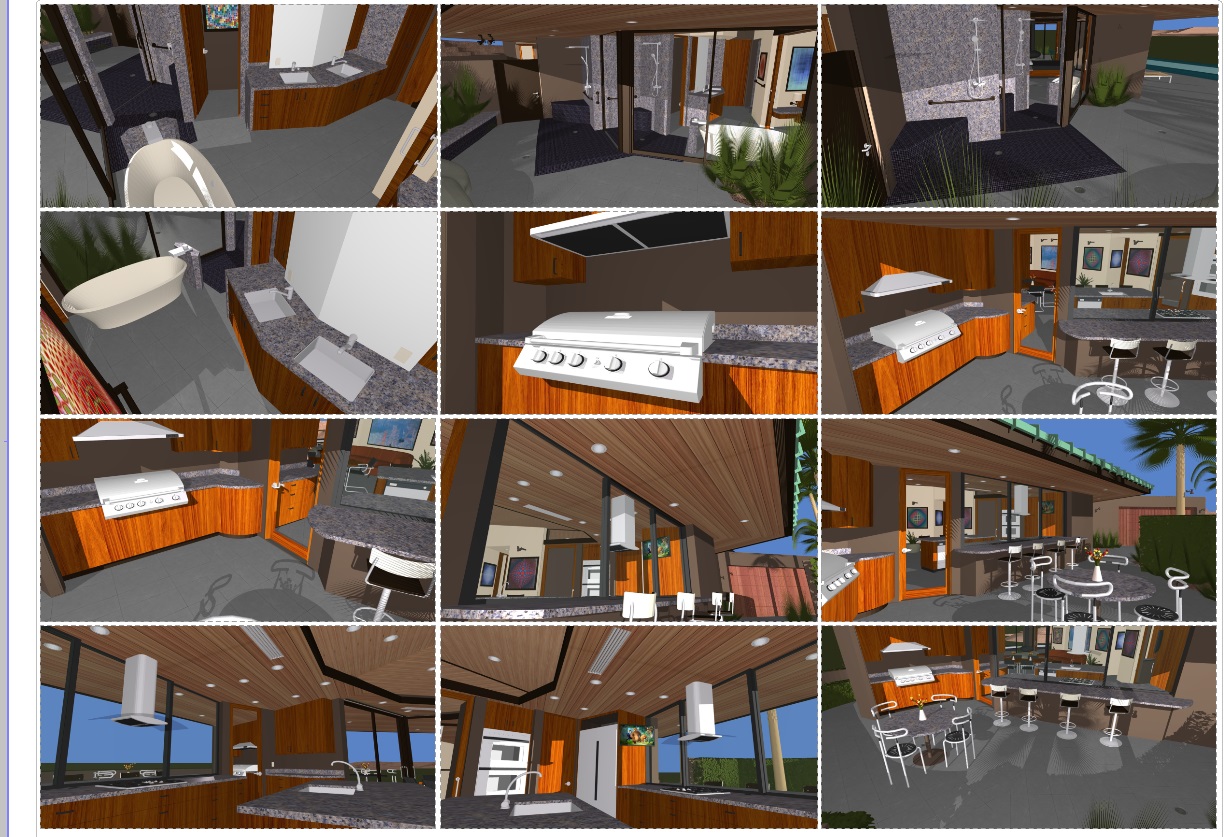
The following drawings and renderings continue this progression outward from the primary suite into the main living, dining, and kitchen environments that form the social heart of the residence.
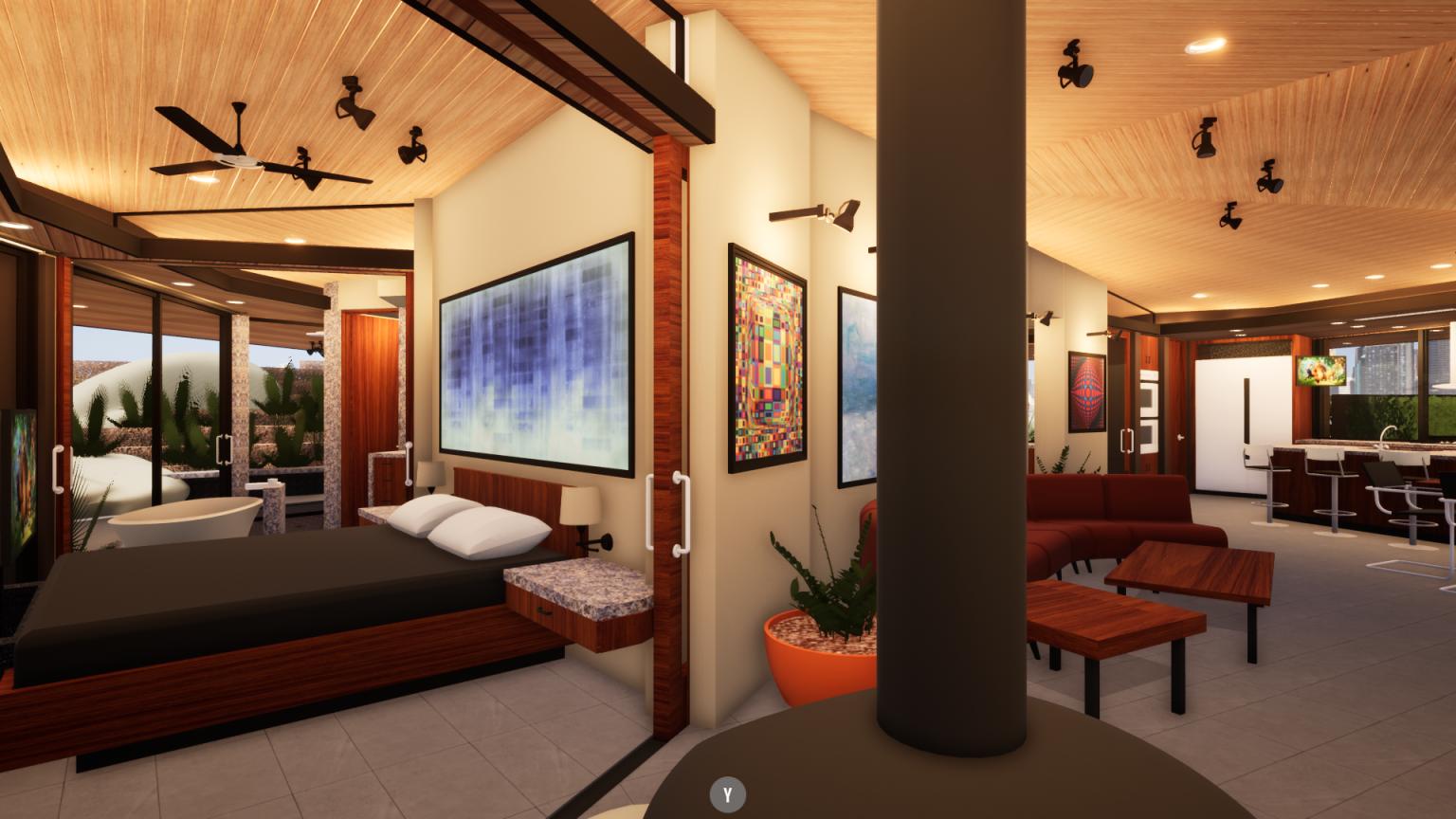
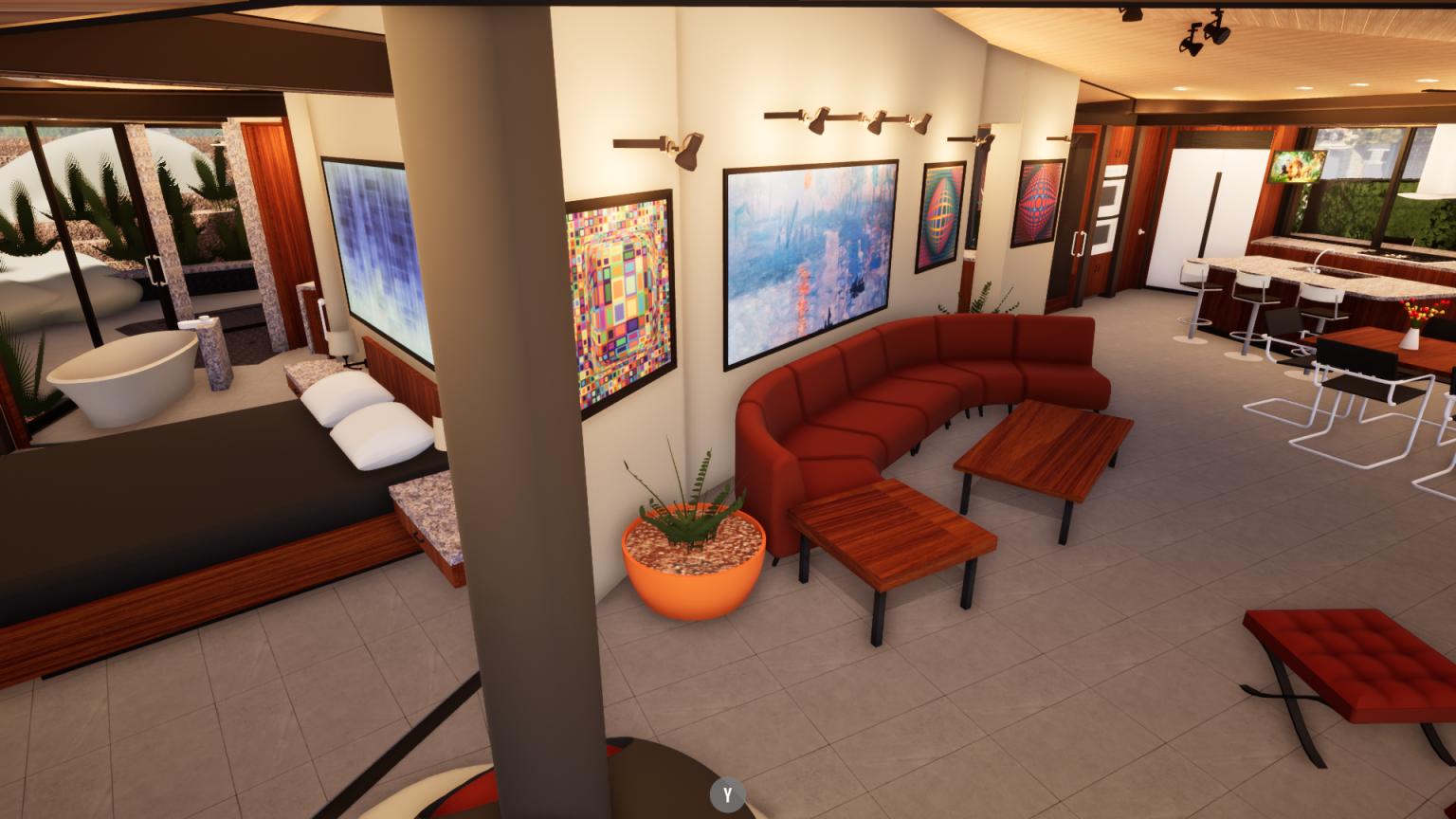
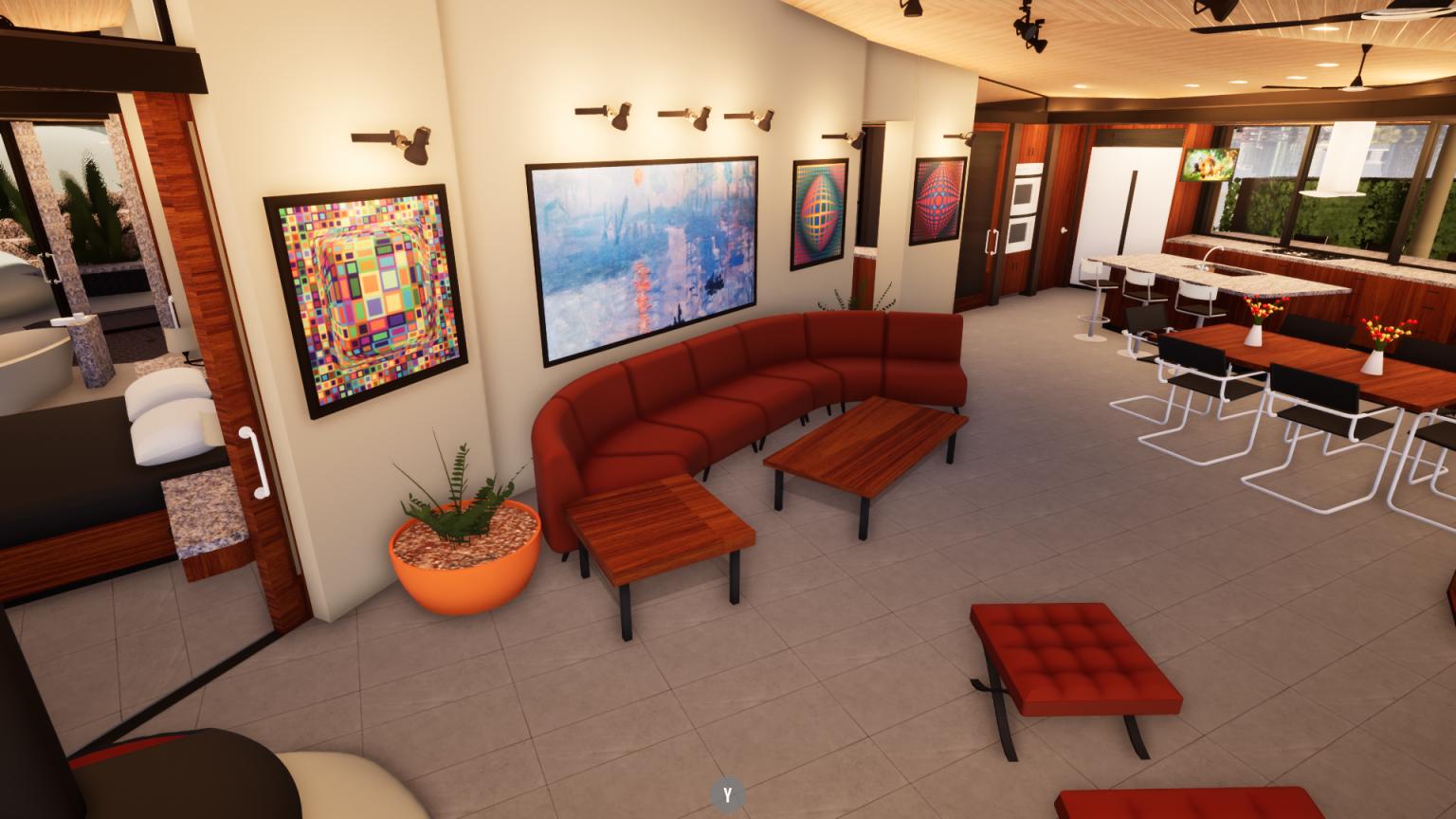
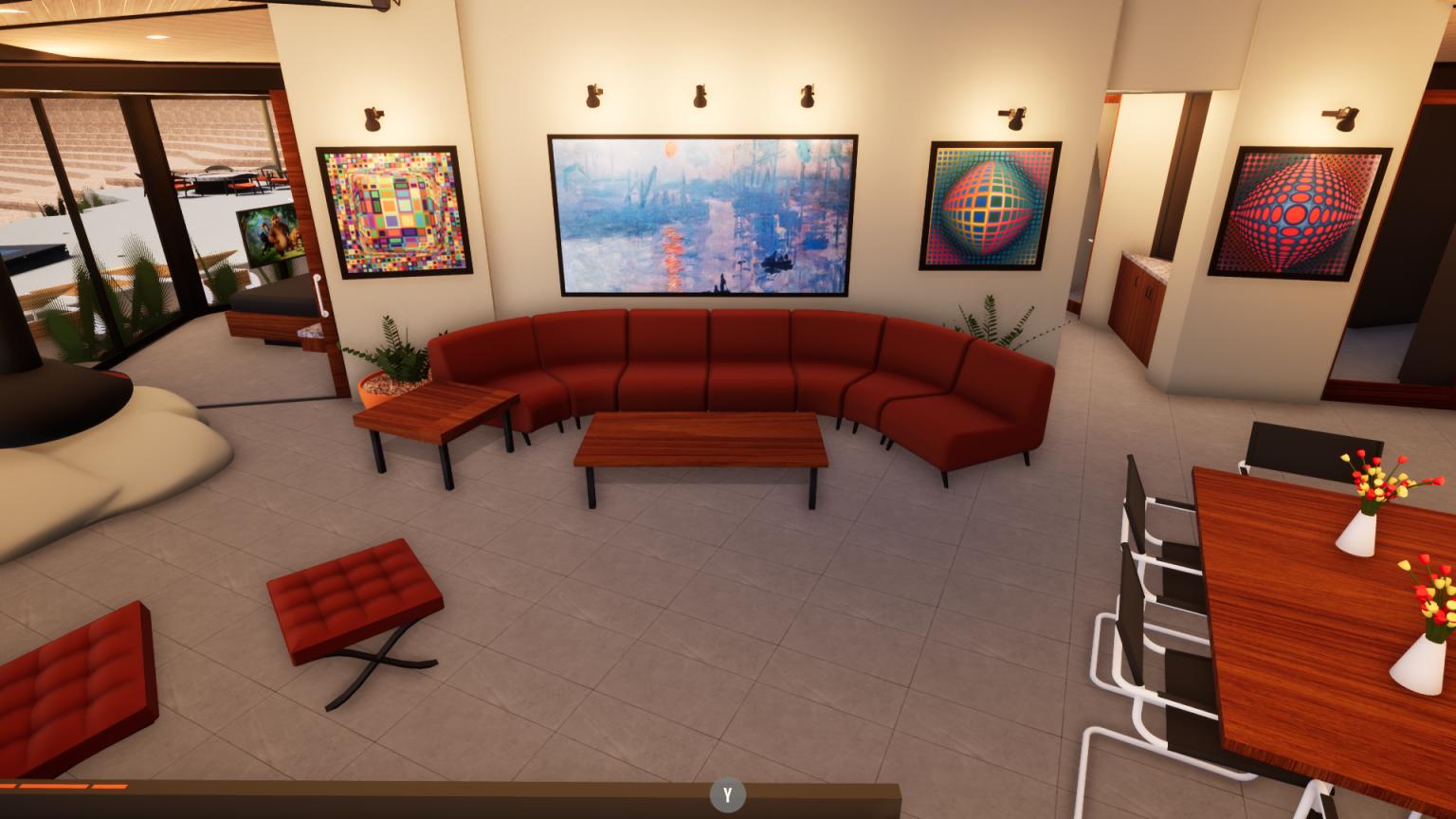
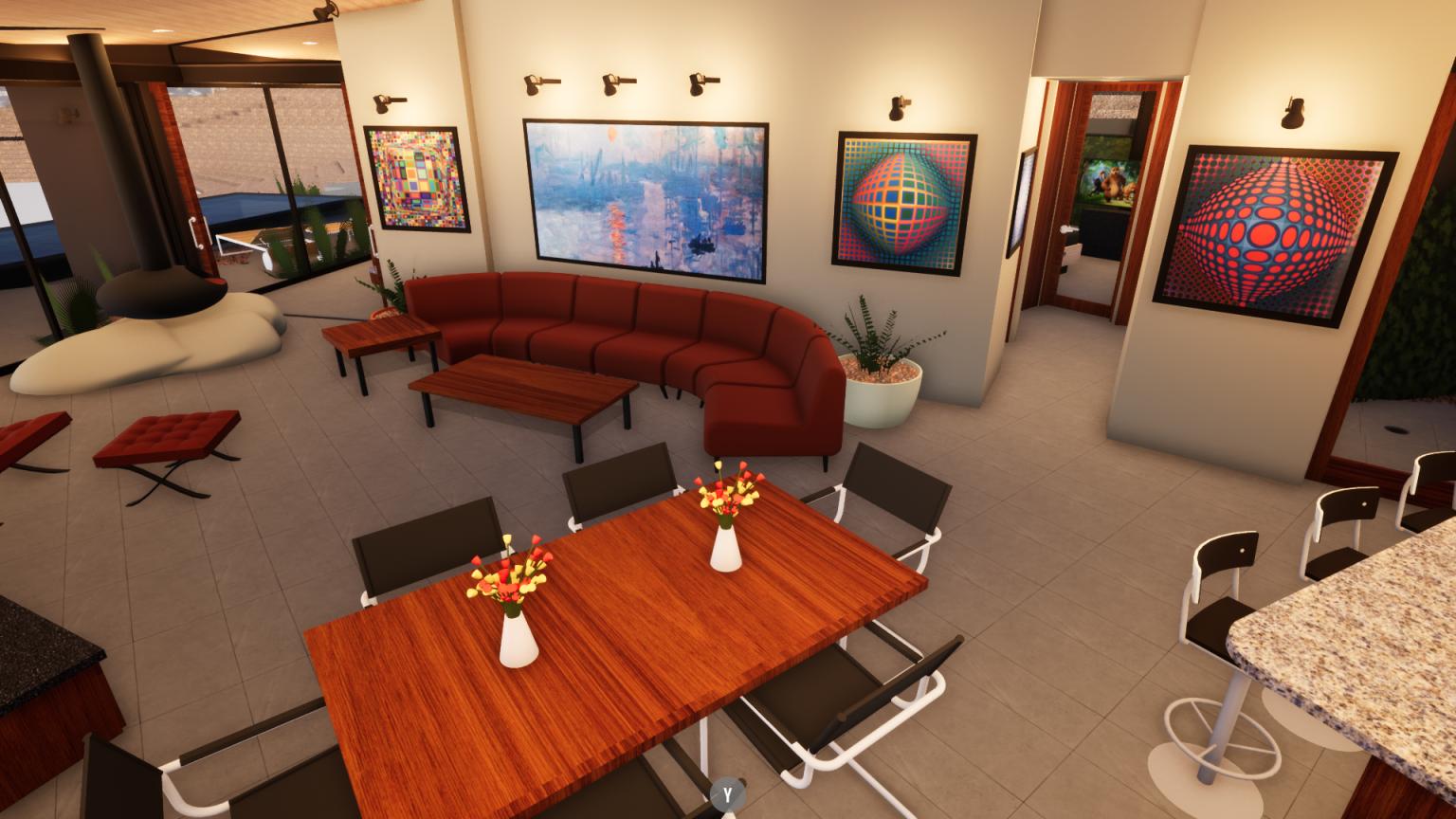
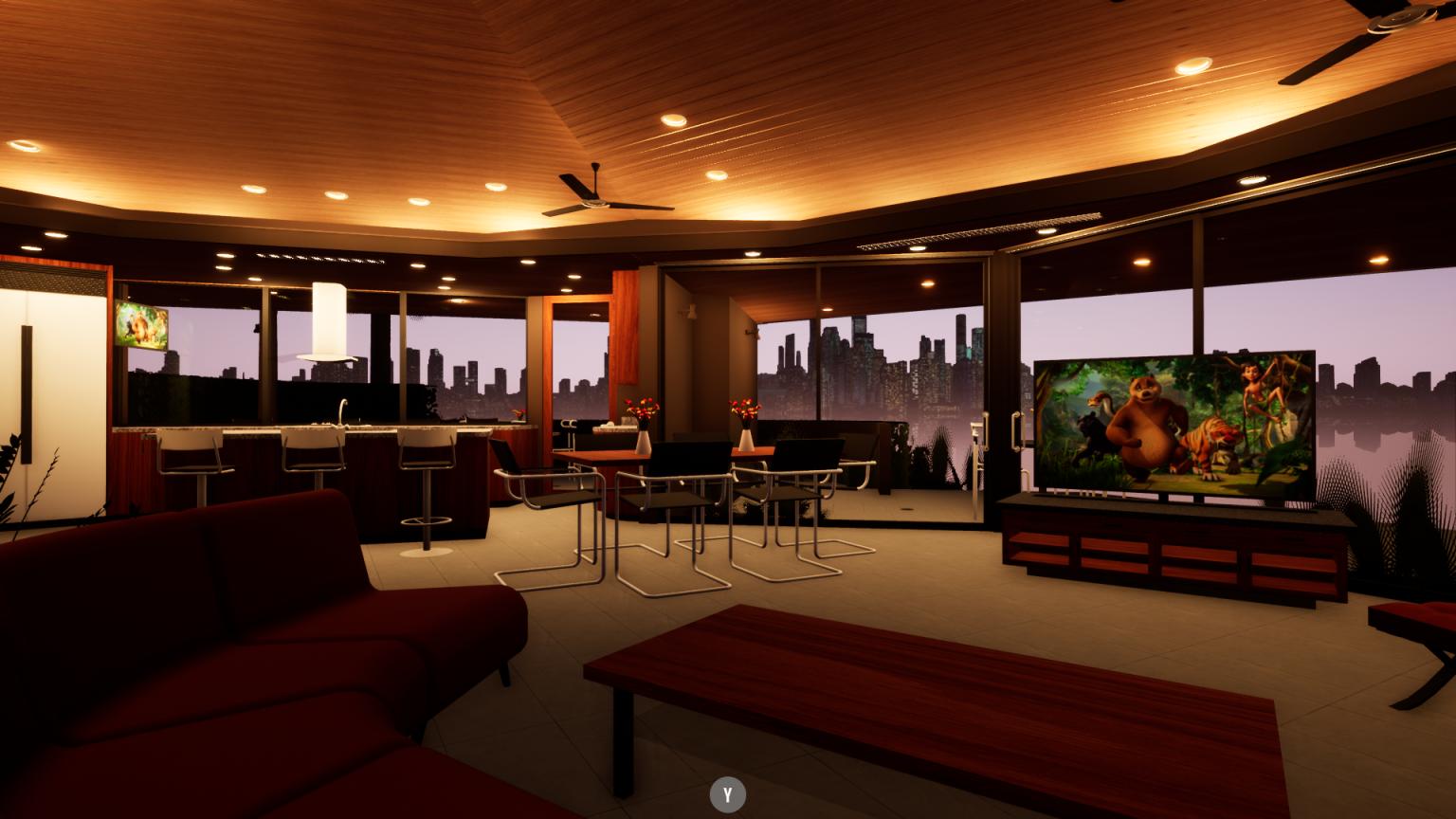
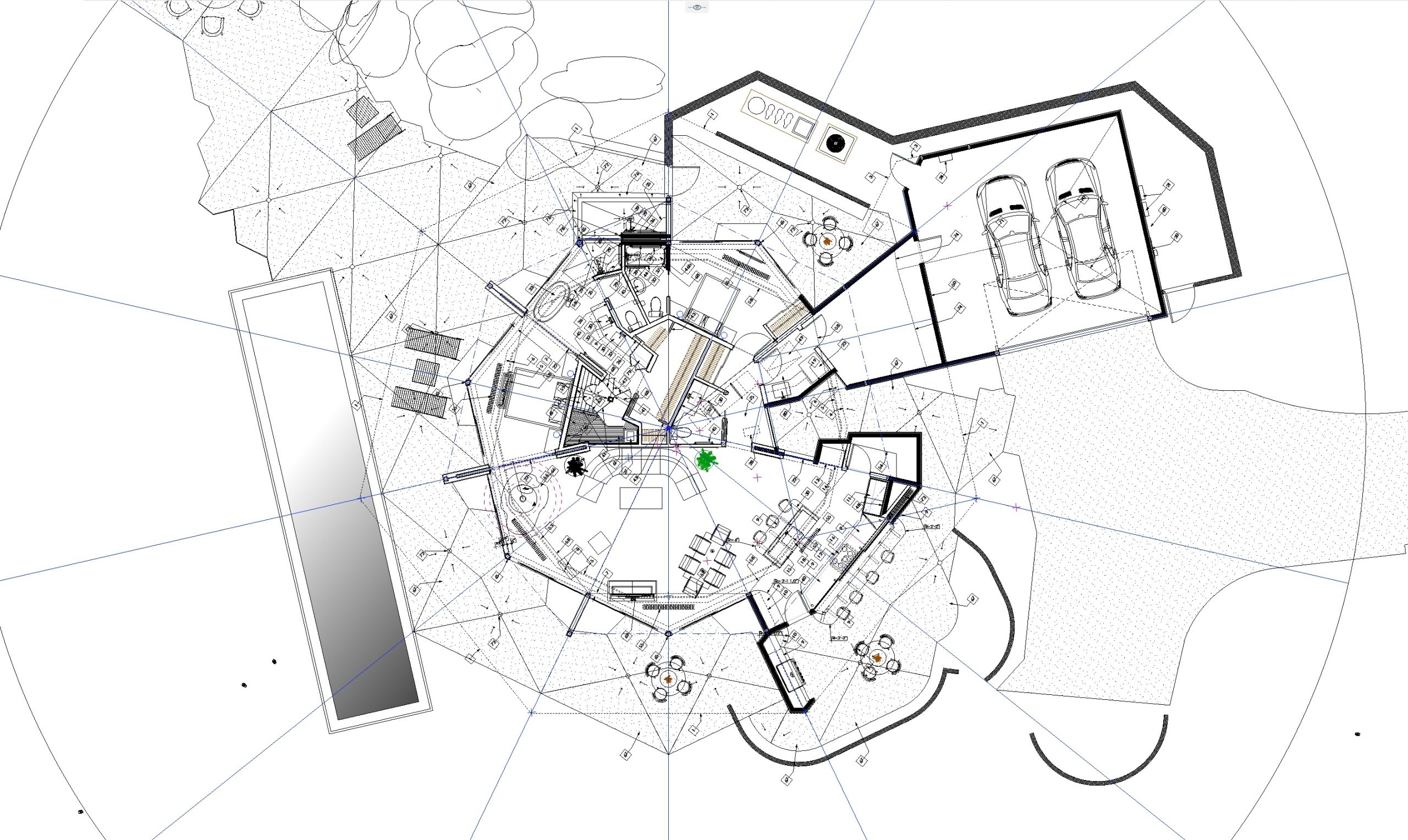
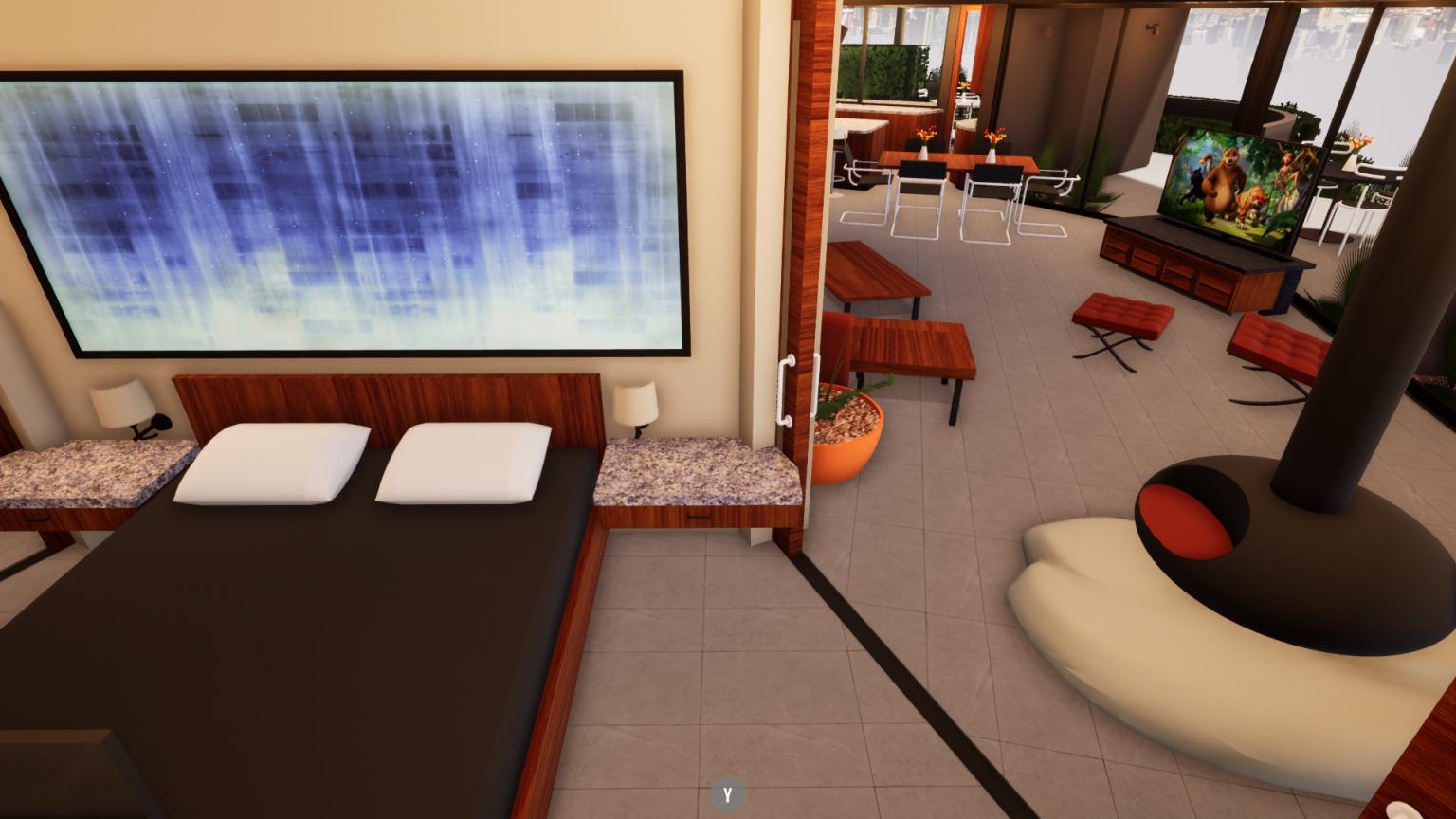
The spatial sequence expands outward from the private suite into the central living environment through a carefully controlled progression of circulation paths, view corridors, and layered sightlines.
Although the primary suite visually connects to the surrounding living areas through full-height glazing and aligned openings, direct views into the sleeping and bathing areas are intentionally concealed from the main social spaces. From the great room, occupants primarily experience the distant landscape framed through the primary suite rather than the bedroom itself. Only upon approaching the central fireplace does the full spatial continuity between the great room, primary bedroom, and bath environment gradually reveal itself.
This controlled visual organization allows the residence to maintain a strong sense of openness while preserving privacy between intimate and social functions. Pocketing lift-and-glide door systems separate the primary bath from the primary bedroom and the primary bedroom from the main living area, allowing those spaces to open completely when desired while disappearing from view when retracted.
At the exterior perimeter, full-height narrow stile-and-rail aluminum sliding glass door systems connect the conditioned interior spaces to shaded outdoor terraces and desert views. Concealed motorized roller shades are integrated within dropped ceiling pockets at these openings, with both sheer and blackout shades available to control privacy, glare, solar exposure, and television viewing conditions. The shade pockets are combined with indirect cove lighting that softly illuminates the clear vertical-grain western red cedar ceilings, allowing the technical systems to support the architecture without visually dominating it.
Note from the Designer
Unfortunately, this project came to an end before I had the opportunity to complete the remaining construction documents. I’ve intentionally left these unfinished sheets (Exterior elevations, interior elevations, Building sections, and a detail sheet.) in the set because they represent the project exactly as it existed when work stopped.
If you’d like to see these drawing types fully developed, please refer to the Jackson Residence Construction Documents elsewhere on this website.